
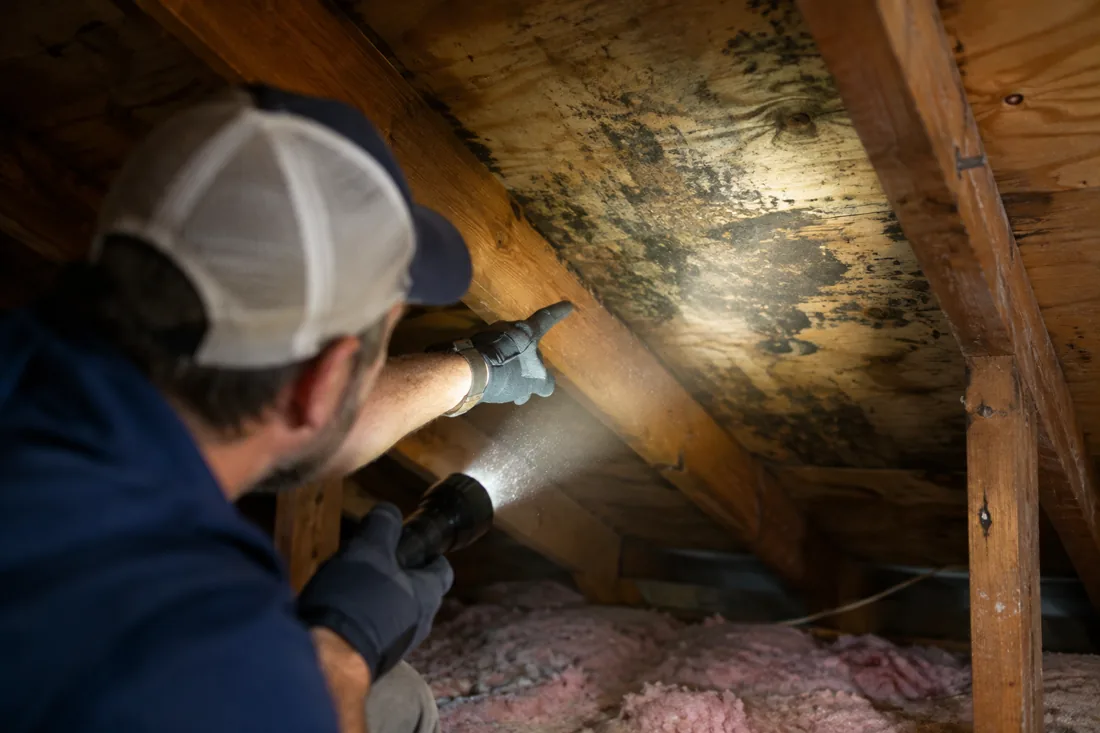
Growth on Attic Wood Needs More Than a Surface Coating
Leave affected attic materials undisturbed. Limited footing, wiring and concealed ceiling openings can make an attic unsafe to enter without a planned work route.
A stained roof board may reflect a roof leak, moisture around a duct or a plumbing event above the ceiling. The cleanup scope depends on the affected assembly and whether it is still wet. Spraying a coating over the visible patch does not establish the source or the condition of the material underneath.
Fort Worth Water identifies attic water lines as a freeze concern. An earlier rupture can leave a wet insulation or framing pocket even after its room-side ceiling has been patched. A roof-space assessment therefore uses the repair history and accessible material findings instead of assuming all attic growth comes from one ventilation problem.
Organizing Attic Access, Source Work and Mold Cleanup
- Review the attic history.
Roof leaks, plumbing repairs and earlier ceiling stains guide the inspection.
- Assess affected materials.
Decking, framing and insulation need location-specific checks.
- Plan controlled access.
The cleanup route separates affected work from occupied rooms.
- Check before reinstatement.
Moisture and material findings guide insulation and ceiling repairs.
Water still spreading? Call now to speak to a specialist.
(XXX) XXX-XXXXRoof Entry, Plumbing and Duct Moisture Leave Different Clues
A stain that follows precipitation directs attention to the roofing assembly, while water beside a repaired supply line raises another source question. Moisture near ductwork or equipment needs its own investigation. The observation is a starting point, not proof of a particular cause or the extent of concealed growth.
A roofing or plumbing provider addresses its source work separately from mold cleanup. For wet ceiling layers below an attic event, ceiling and attic water damage assessment connects the room-side findings with the material above. Dry-looking paint beneath the attic does not establish that the upper assembly is dry.
Check the Back of the Insulation and the Framing Beside It
Insulation can hide affected wood or retain water against the ceiling assembly. Its type, condition and exposure influence whether it can remain. The scope should identify where insulation must be moved or removed for access and which retained surfaces will be examined afterward. A visible roof-board patch cannot set that boundary on its own.
Framing members and deck edges can have different surface conditions across a small area. Inspection needs safe access to those locations rather than a view from the hatch alone. Where the extent or identification is uncertain, mold assessment and testing decisions should be resolved before cleanup assumptions become the repair plan.
| Location | Source or access question |
|---|---|
| Roof decking below an entry point | Has the roof leak been corrected? |
| Wood beside attic plumbing | Was a leak repaired and its wet material checked? |
| Framing near ductwork | Is condensation or equipment leakage involved? |
| Insulation at a ceiling edge | What material is concealed underneath it? |
Keep the Attic Work Route Separate From Living Space
The hatch, hallway below it and route for removed materials need planning. Affected debris should not be dropped into occupied rooms or carried through clean storage without controls. The scope may require containment, filtration and specific material handling around the access point as well as at the visible growth.
The attic itself has access limits. Ceiling drywall is not a walking surface, and wet electrical components or damaged framing need separate attention. Occupants should not enter to reposition equipment or check a patch on the far side of the roof space. Safe access is part of the work, not an assumption made from the hatch size.
Cleaning Sound Wood Does Not Repair Deteriorated Decking
Surface cleanup and structural condition are different decisions. A retained wood surface may be suitable for cleaning, while deteriorated decking or damaged material may need repair or replacement by the appropriate provider. The cleanup scope should describe that distinction instead of promising to retain every affected board.
Moisture control is also specific to the source. Changing ventilation cannot correct a leaking pipe, and sealing a surface cannot stop roof entry. If an affected air-distribution component is involved, HVAC and duct mold work needs to identify its material and condition rather than treating it like exposed wood framing.
Before New Insulation Covers the Attic Findings
The retained materials need the review required by the project before replacement insulation or ceiling work hides them. Keep a record of the inspected locations, removed material and source repair. That record helps distinguish a later new leak from a condition that was never accessible during the first scope.
If an odor returns or a stain changes after precipitation, revisit the source and the concealed area. A clean-looking hatch opening does not represent the whole attic. The work should state which locations were checked and which still require another form of access or a different repair provider.
The mold planning calculator includes attic location because low clearances, insulation and work-route controls can change the scope. A floor-area estimate below the attic cannot show how difficult it is to reach an affected deck edge. Discuss the actual access and material condition alongside the visible area.
Sources: EPA hidden growth investigation, Fort Worth attic pipe guidance, Texas mold consumer guidance.
Connected Cleanup for Attic Moisture Sources and Equipment
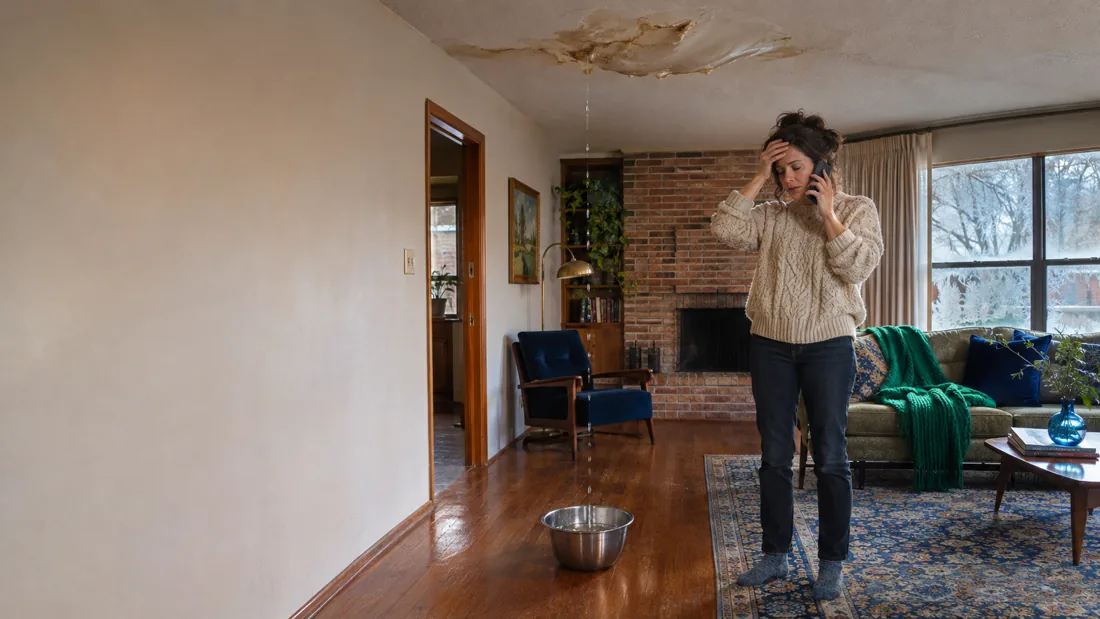 Ceiling & Attic Water DamageOverhead leaks saturating ceiling drywall and insulation before drips appear inside the occupied room.
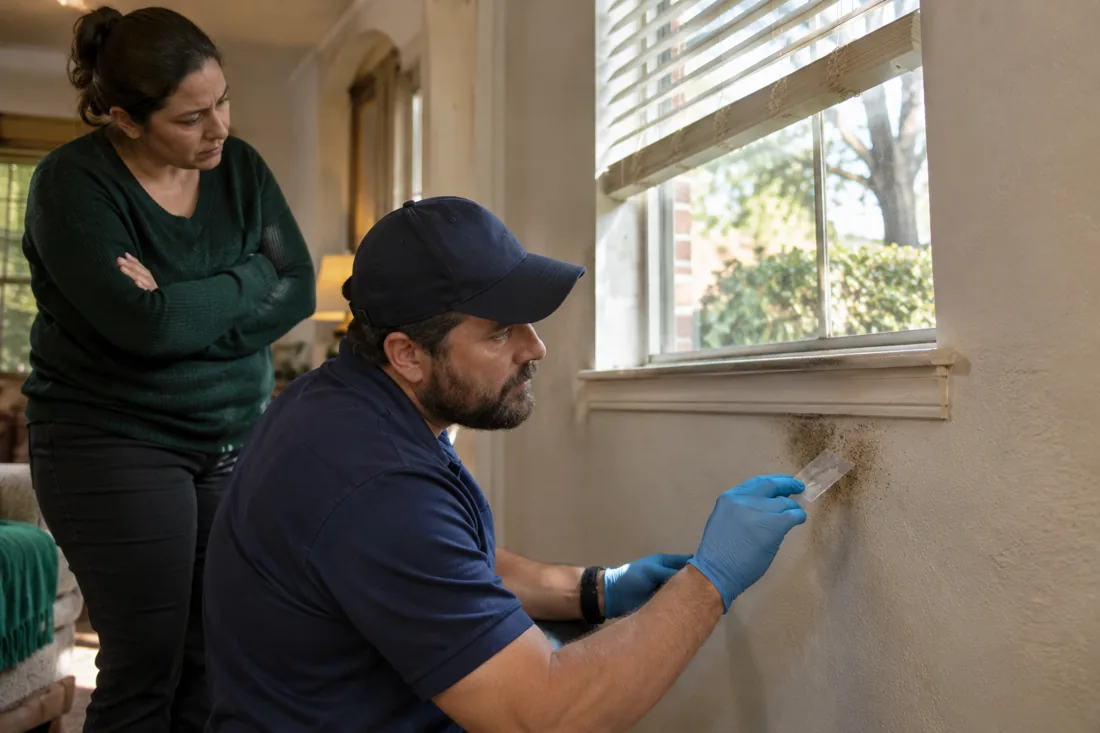 Mold Inspection & TestingUnexplained damp odors and suspected growth requiring a closer look at moisture and affected surfaces.
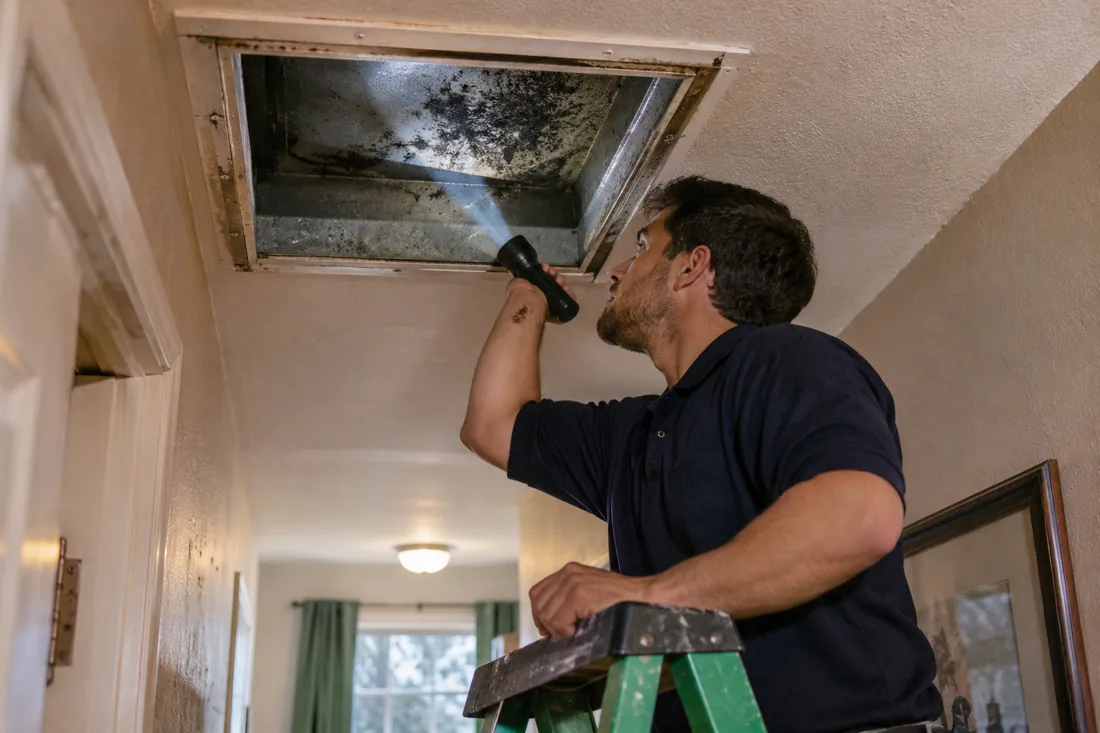 HVAC & Air Duct Mold CleaningSuspected growth around air handling equipment or duct components exposed to leaks or condensation.