
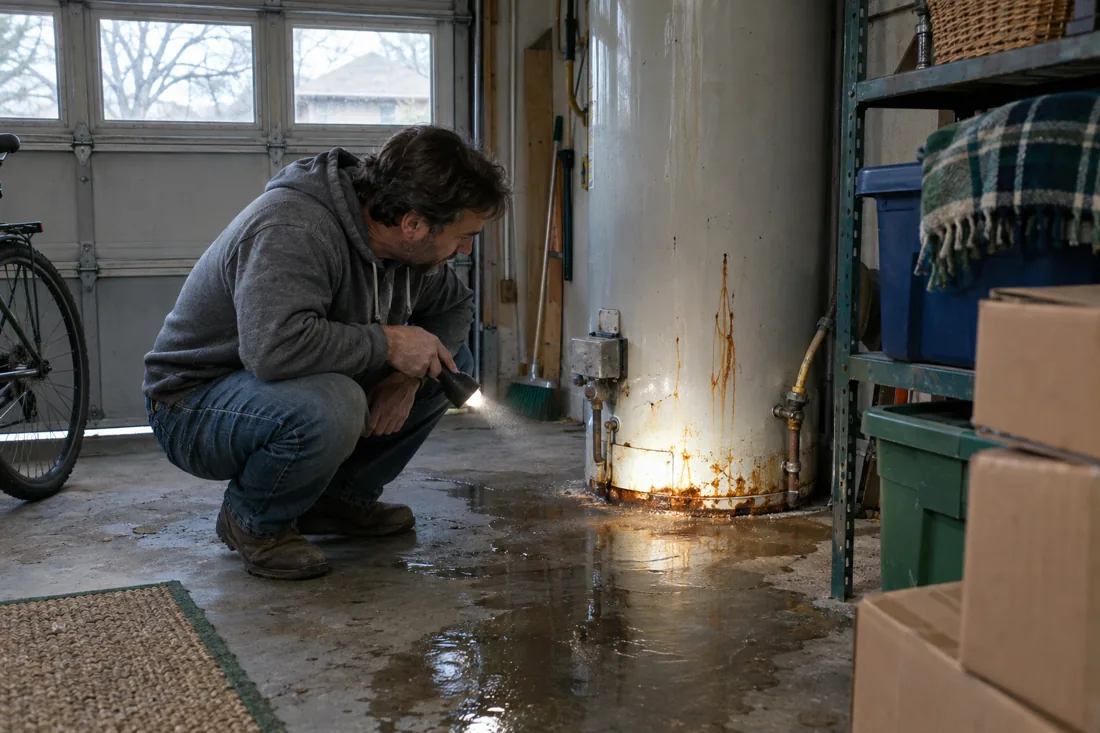
Water Around the Heater: Stay Clear of Heat and Wet Connections
Keep away from hot water and wet electrical or fuel-system components. Arrange the source shutdown and repair through the appropriate service provider.
A water heater leak can come from the tank, a supply connection or another nearby component. The puddle alone does not identify which one failed. Cleanup addresses water that has reached the building, while the repair provider determines how to isolate and correct the equipment problem. Do not relight equipment or reset a wet electrical connection to test it.
In a garage or utility closet, water can collect behind a platform, under a wall partition or beside stored belongings. An adjoining interior room may be wet even when the garage floor has already drained. The assessment follows those paths before deciding what needs extraction, access or drying.
Tracing a Water Heater Leak Into the Surrounding Building
- Call and explain what happened.
A specialist asks about the water source and the rooms affected.
- We find where the water went.
Moisture checks locate wet materials, including inside walls and under floors.
- Water removal and drying.
Standing water comes out first. Drying equipment goes where it is needed.
- Checked dry before repairs.
Materials are confirmed dry before anything is closed up or replaced.
Water still spreading? Call now to speak to a specialist.
(XXX) XXX-XXXXA Drain Pan Does Not Show the Whole Wet Area
Water inside a pan does not establish that every drop stayed there. A connection above the tank can wet the wall behind it, and an overflowing pan can send water toward a partition or floor opening. The specialist checks nearby wall bases and accessible edges rather than stopping the inspection at the equipment footprint.
Stored boxes and a raised equipment platform can conceal the route. Moving those items requires a safe approach around the heater and its connections. Photograph damaged belongings from a dry position, and leave equipment disconnection to the repair provider. Cleanup access should not create another leak or interfere with the source repair.
Where Garage Water Reaches a Finished Room
A garage slab can slope differently from the floor in an adjoining room. Water may move through a wall opening or collect along a partition before appearing under interior trim. A closet on the other side of the heater wall therefore deserves a check even if the visible leak stayed near the tank.
When the heater is above occupied space, the inspection also considers the floor or ceiling below. Water can follow a pipe penetration instead of dripping directly under the failed fitting. Ceiling and attic water damage cleanup addresses those overhead assemblies where the water has spread beyond the equipment space.
| Location | Material or access issue |
|---|---|
| Behind the tank | Wall surface, lower framing and supply penetrations |
| At the equipment base | Platform material, pan overflow and trapped water |
| Across a shared wall | Interior trim, closet flooring and wall plate |
| Below an elevated location | Ceiling drywall, insulation and the room underneath |
Cold Weather Can Expose a Connection Problem
Fort Worth Water identifies pipes in unheated parts of a home as freeze concerns. A garage connection outside the heated living space needs consideration during a cold spell, but a puddle near a water heater does not prove freeze damage. The repair provider must establish whether a line, fitting or the equipment itself is responsible.
If a frozen section has ruptured, frozen and burst pipe cleanup follows the resulting water into the structure. The timing matters: a line can begin leaking during the thaw. Keep the repair history with the cleanup notes so new dampness is not mistaken for moisture left from the original release.
Remove Water, Then Open the Materials That Need Access
Accessible floor water is removed once the work area and source conditions permit it. The assessment identifies wet trim, wallboard, insulation and stored material around the heater. A hard garage floor can be reachable while a wood platform or interior wall base remains wet. Those assemblies need separate decisions about cleaning, retention and access.
Drying equipment is placed around the material that remains, with clear routes and suitable electrical conditions. A narrow utility closet may require an access change before airflow can reach the wet surface. Structural drying is concerned with that concealed moisture rather than simply making the equipment room feel less damp.
Check the Wall After the New Connection Is Working
Replacing a tank or repairing a fitting does not show that its surrounding wall has dried. The wet boundary needs repeat checks, especially beside a platform or behind stored belongings. A cabinet or closet wall can develop an odor or swelling after the floor surface looks normal. Those changes should be investigated before repainting or returning storage.
The cleanup record should separate the source repair from the materials work. It can identify removed finishes, retained framing and the locations used for follow-up readings. That distinction helps when a room is put back together, because a working heater and a dry wall are two different findings.
The water damage planning calculator helps organize room area and affected materials. Equipment replacement, gas work and plumbing repair are separate from cleanup. A small tank footprint can still lead to a wider job when water has crossed the shared wall or entered a finished ceiling.
Sources: Fort Worth freeze guidance, EPA wet-material drying.
When Water Travels Beyond the Heater Space
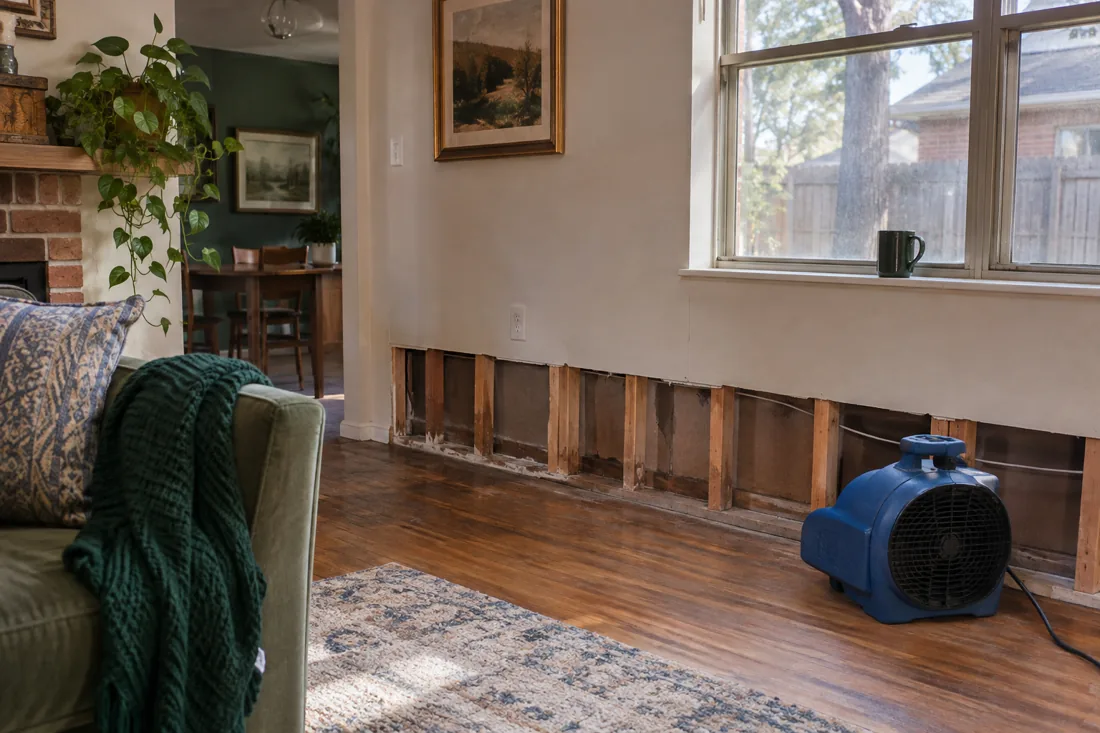 Structural Drying & DehumidificationMoisture trapped in framing, wall insulation, subfloors and cabinet bases after visible water is removed.
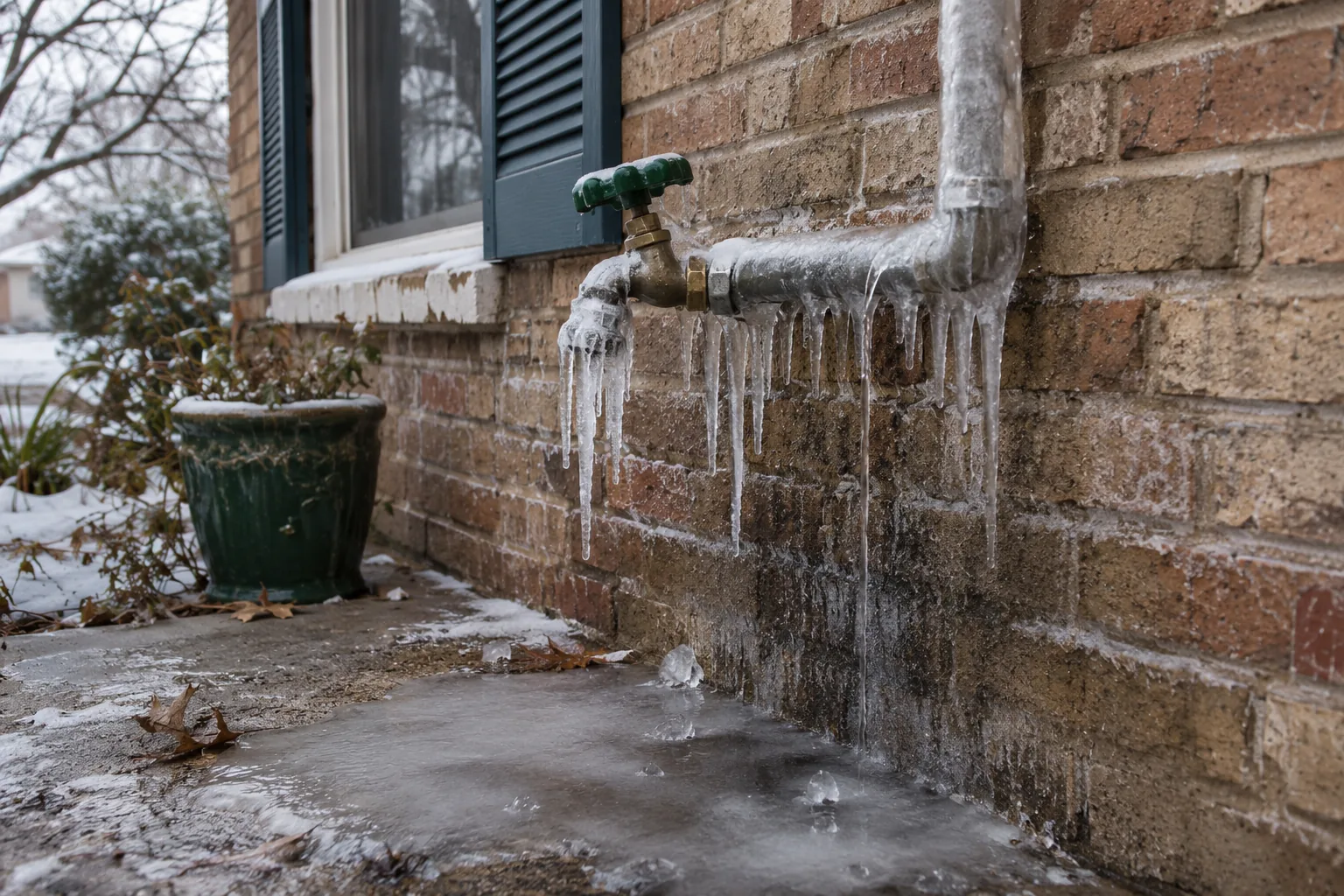 Frozen & Burst Pipe CleanupRuptured frozen supply lines sending water through attic insulation, wall cavities and the rooms below.
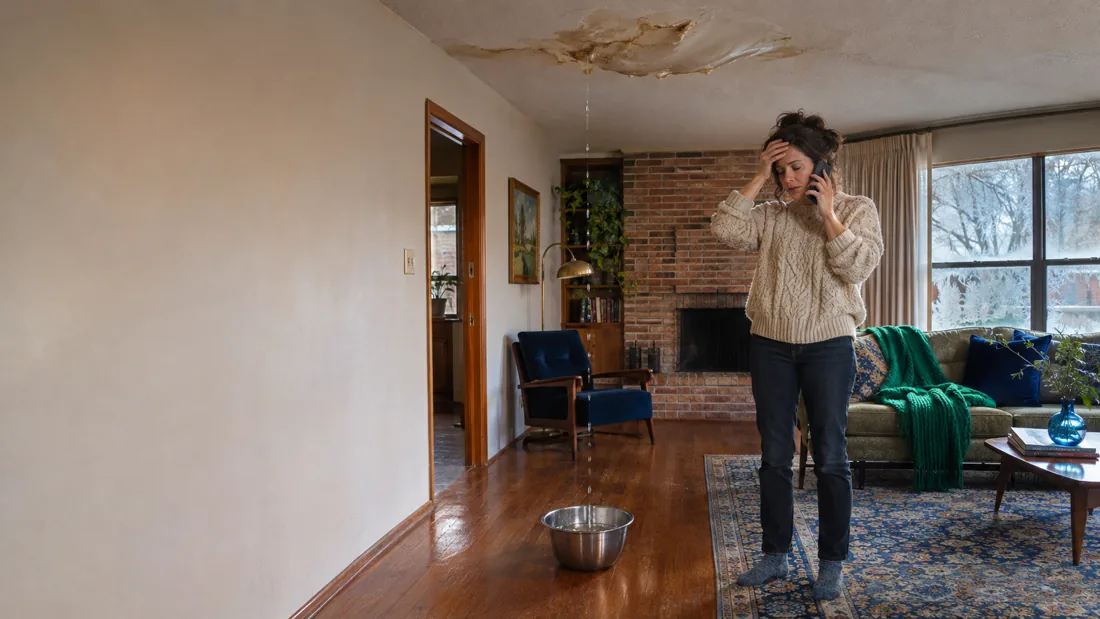 Ceiling & Attic Water DamageOverhead leaks saturating ceiling drywall and insulation before drips appear inside the occupied room.