
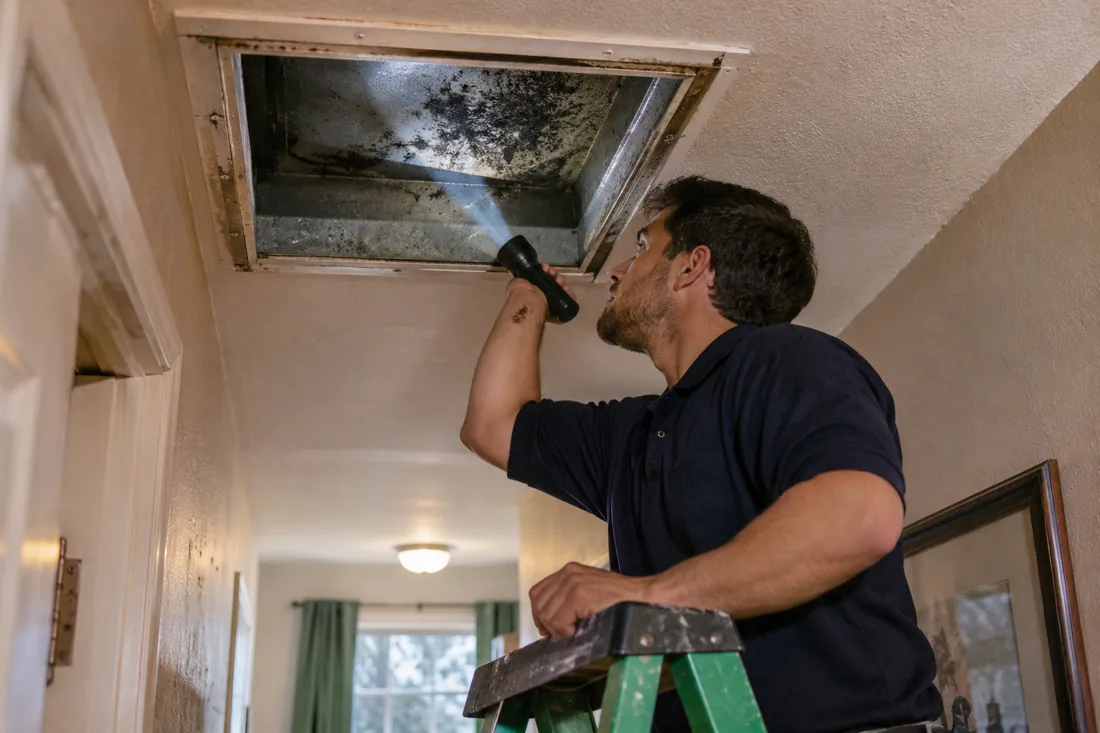
Suspected Growth at a Register or Inside HVAC Equipment?
Avoid spraying chemicals into a register or running a suspected contaminated system to dry it. Arrange an assessment of the affected components and their moisture source.
Dust, staining and biological growth can look similar around an air opening. The assessment needs to identify the actual condition and the material involved. A bare metal surface, internal fibrous lining and flexible duct assembly do not have the same cleaning or retention options. A blanket promise to clean every component misses that distinction.
Where ducts or equipment pass through a Fort Worth attic or crawl space, a nearby leak and condensation conditions both deserve consideration. The source may involve the air-conditioning equipment, its insulation or another water route beside it. HVAC repair and any mold-related assessment must be coordinated within their appropriate roles.
Identifying the Affected HVAC Material Before Choosing Treatment
- Review the visible concern.
Record where the mark or odor appears and when it changes.
- Inspect the system location.
Components, insulation and nearby moisture routes are considered.
- Select a material-specific scope.
Cleaning and replacement decisions depend on what is affected.
- Address the source before use.
The responsible providers review the system and cleanup findings.
Water still spreading? Call now to speak to a specialist.
(XXX) XXX-XXXXA Dirty Grille Does Not Establish Growth Inside Every Duct
The first step is to identify the reported location and the evidence supporting the concern. A surface mark near a register can be different from growth on an accessible equipment component. An odor can also have a source elsewhere in the building. The assessment should state what has actually been viewed and what remains inaccessible.
Where identification or extent is uncertain, mold inspection and sampling decisions need a defined purpose. A sample from one opening cannot describe every concealed run. The investigation should connect its findings to a practical component scope rather than use a single result to justify treating the whole system automatically.
Wet Insulation Changes the Cleaning Decision
Porous insulation inside a duct is not the same surface as bare sheet metal. EPA guidance calls for replacement of wet or moldy fibrous duct material rather than treating surface cleaning as a way to restore it. The HVAC provider needs to identify which components and liners are present before a retention promise is made.
Other components may be considered for cleaning depending on their material, condition and accessibility. The scope should distinguish those from damaged insulation or an assembly that needs replacement. A product spray cannot substitute for identifying that material or addressing the moisture that allowed the condition to develop.
| Finding | Decision to resolve |
|---|---|
| Mark on a room grille | Identify the substance and inspect the surrounding condition |
| Affected accessible metal | Evaluate a suitable cleaning method and source correction |
| Wet or moldy fibrous liner | Arrange replacement assessment for the affected material |
| Moisture near equipment | Check drainage, insulation and the equipment condition |
Condensate, Insulation and Nearby Leaks Need a Source Review
Water around an air handler can be connected to condensate handling or another nearby leak. Insulation defects and moisture conditions around ductwork also need investigation. The provider should identify the source instead of assuming that cleaning the register will keep the condition from returning.
The surrounding building may have its own affected material. An attic ceiling pocket can need attic mold cleanup, while growth outside the system may call for building-material mold removal. Those findings should be kept distinct from the internal component scope, even when the same water event connects them.
Chemical Sprays Are Not a Default Answer for Every Duct
The proposed method needs to be suitable for the exact component and any product's approved use. EPA does not present routine duct chemical treatment as a substitute for physical cleanup and moisture control. Do not introduce a household product through a register or assume a treatment intended for bare metal is suitable for internal insulation.
Access and debris control also matter. Work at a component should account for how particles and removed material will be handled, not just how the visible face will look afterward. Occupants need a clear explanation of any system-use restrictions and which provider is responsible for the equipment condition before it returns to normal operation.
Review the Repaired Moisture Route and the Remaining Components
A cleaned or replaced section does not establish that a condensate or insulation problem has been corrected. The responsible HVAC provider needs to address its findings, and any required mold assessment or completion review must remain a separate, clearly identified part of the project. Keep the location and material records together for later maintenance.
If the same odor or visible mark returns, revisit the actual location and timing. A new condition should not automatically trigger another whole-system treatment. Check whether the source has changed, whether a nearby building assembly remains damp or whether the affected component was outside the earlier access scope.
The mold planning calculator includes HVAC as a location because system access and material type can change the work. It does not determine whether duct insulation is retainable, select a treatment product or estimate all equipment repair. Those decisions require the component-specific assessment.
Sources: EPA duct guidance, Texas mold assessment roles.
Building Assessment Connected to an HVAC Mold Concern
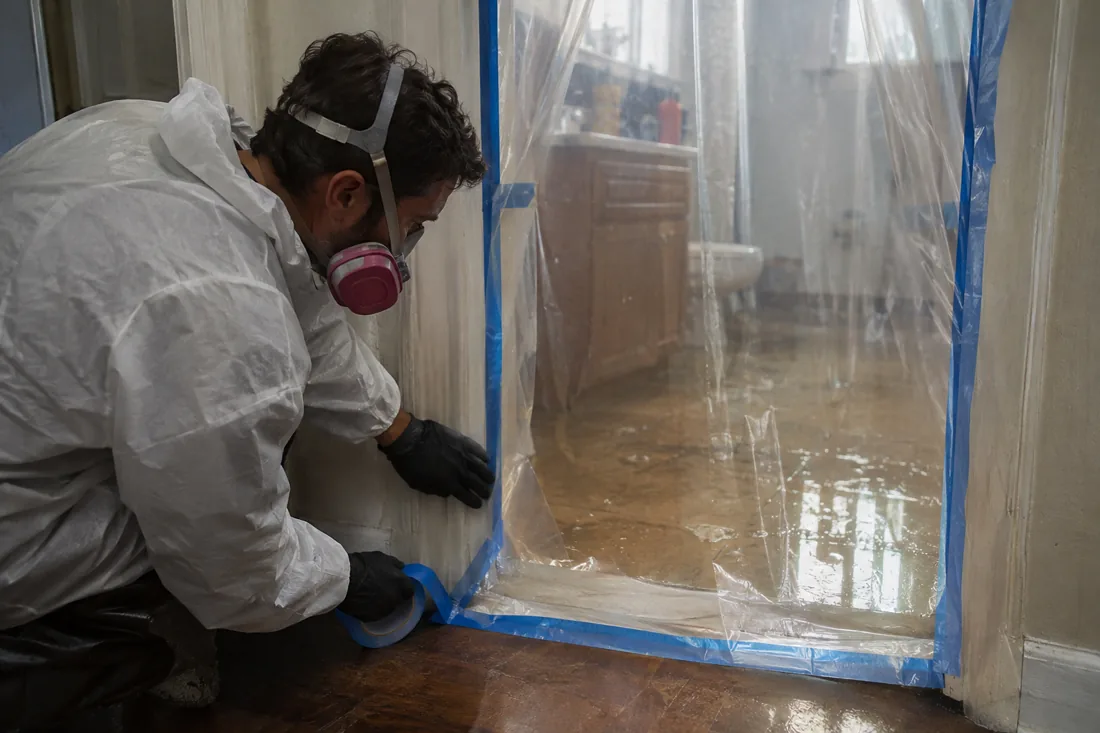 Mold RemovalVisible or concealed growth on damp building materials that needs containment and controlled removal.
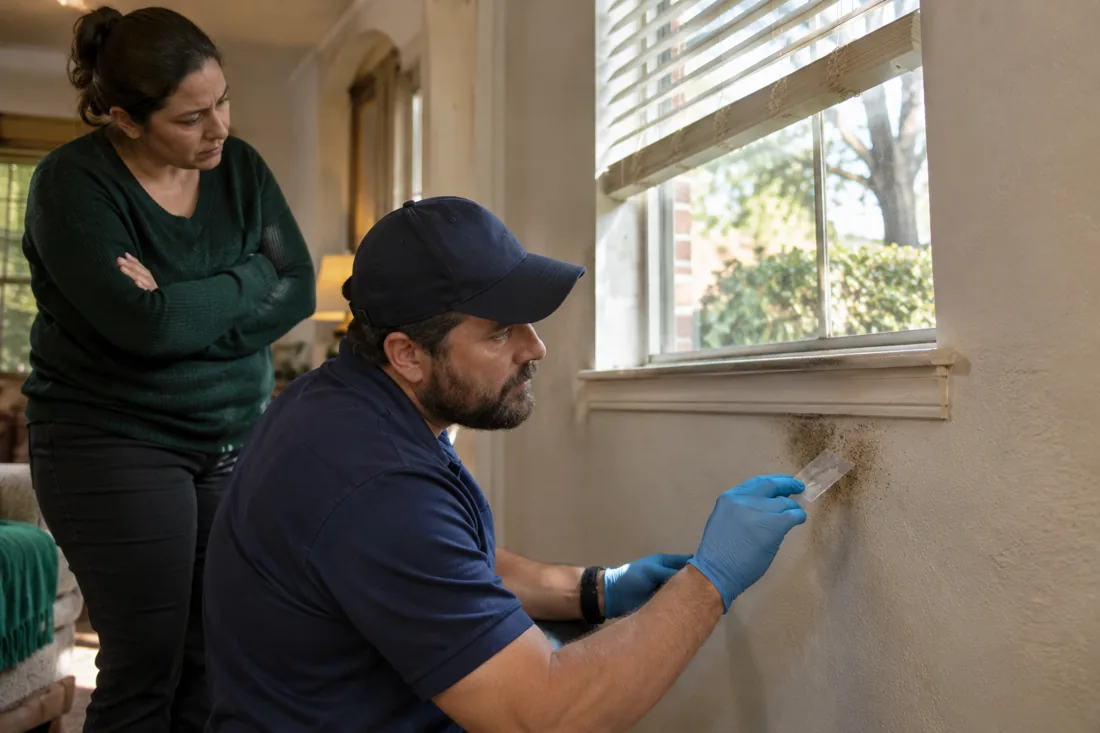 Mold Inspection & TestingUnexplained damp odors and suspected growth requiring a closer look at moisture and affected surfaces.
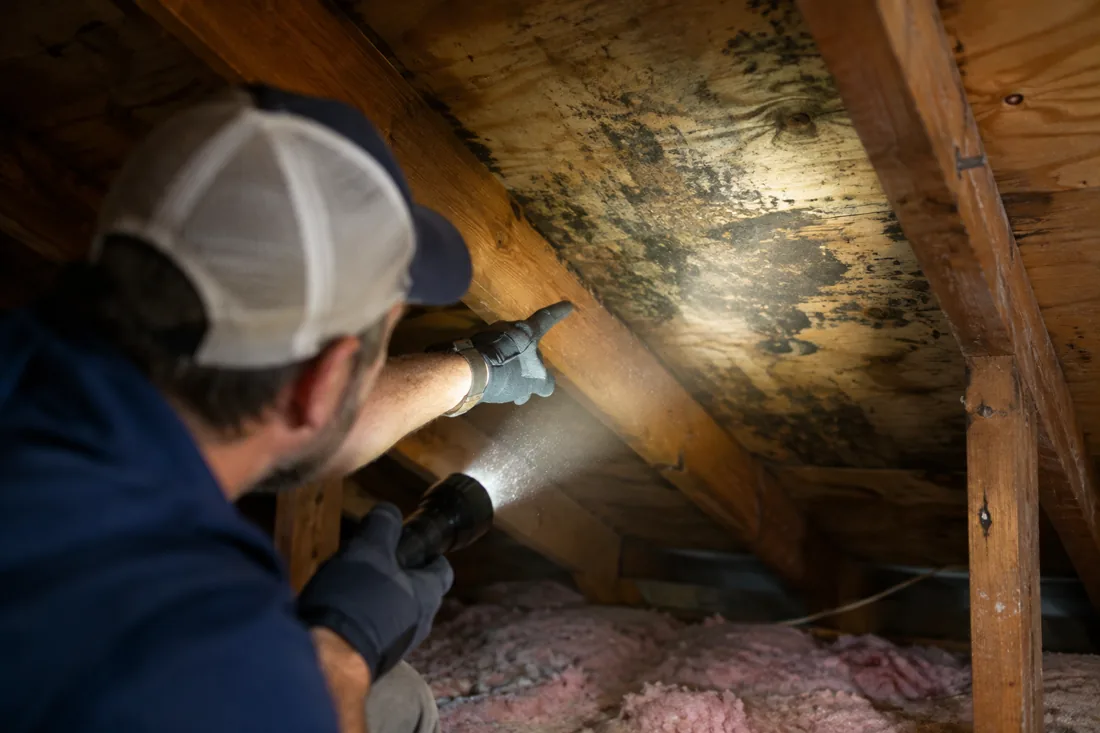 Attic Mold RemovalGrowth on attic roof decking or framing associated with roof leaks and persistent moisture.