
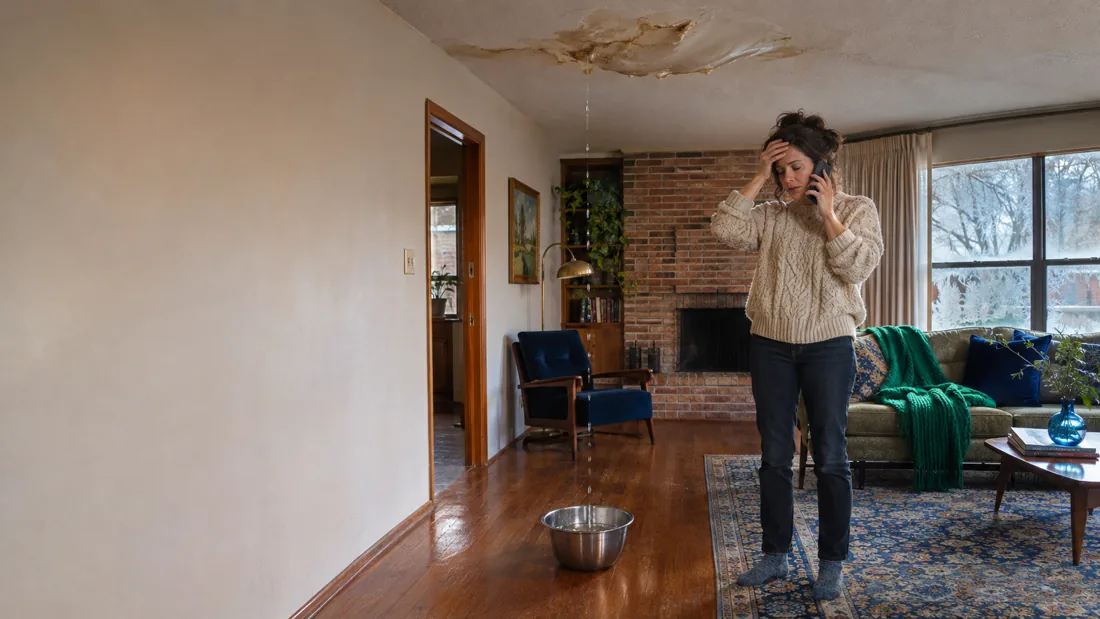
A Sagging Ceiling Is a Reason to Keep the Room Clear
Stay away from beneath bulging or falling ceiling material. Do not puncture the bulge or enter a wet attic to follow the drip yourself.
An overhead leak can come from a roof opening, an attic water line or another building system above the room. Water may follow framing before appearing at a light opening or a drywall joint. Cleanup begins with safe access and source coordination, then traces the wet assemblies instead of treating the stain as the full damage boundary.
Fort Worth Water specifically identifies unheated attic plumbing as a freeze concern. That makes a post-freeze ceiling leak worth checking for a ruptured line, but the source still needs confirmation. A roofer or plumbing provider corrects the entry point while cleanup addresses the wet insulation, ceiling and adjoining wall areas.
Following an Overhead Leak Through the Ceiling Assembly
- Call and explain what happened.
A specialist asks about the water source and the rooms affected.
- We find where the water went.
Moisture checks locate wet materials, including inside walls and under floors.
- Water removal and drying.
Standing water comes out first. Drying equipment goes where it is needed.
- Checked dry before repairs.
Materials are confirmed dry before anything is closed up or replaced.
Water still spreading? Call now to speak to a specialist.
(XXX) XXX-XXXXThe Drip Location May Be Offset From the Source
A joist, pipe route or uneven ceiling surface can move water sideways before it reaches the room. The first visible drip therefore cannot determine the opening needed for inspection. The assessment considers the source history, the wet pattern above and below and the condition of the overhead materials.
A ceiling light opening adds an electrical concern. Do not operate a wet fitting or stand beneath it to collect water. Keep the affected room clear while the condition is assessed. Buckets placed from a dry, safe position do not address a ceiling that may be losing strength or concealment around energized components.
Wet Insulation Can Keep the Framing Damp
Insulation above the ceiling can retain water after a room-side surface begins to dry. The type of insulation, its saturation, contamination and access all affect whether it can remain. Material that is damaged or prevents the retained assembly from drying may need controlled removal rather than another coat of paint below it.
The exposed framing and ceiling edges still need attention after insulation is removed. Water can have reached a wall cavity or collected above a partition, creating separate pockets outside the obvious stained area. A repair opening should follow those findings. New insulation should not conceal a framing surface that has not been checked.
Read the Water Path From Roof Space to Finished Room
The inspection moves through the layers in sequence so that a dry lower surface does not hide an upper wet pocket. Safe access determines which areas can be viewed directly and which need a controlled opening.
| Layer | Possible retained water |
|---|---|
| Roof or plumbing entry | Active leak requiring source repair |
| Attic framing and insulation | Water held above the ceiling face |
| Ceiling drywall | Saturated panels, joints and openings |
| Wall cavity below | Moisture moving beside framing or penetrations |
| Room flooring | Water that has reached the occupied space |
A Frozen Line and an Ice-Related Roof Leak Need Different Repairs
A split attic line calls for plumbing repair and burst pipe water cleanup. Water entering through the roof calls for a roofing assessment and may need winter roof-leak cleanup. The interior wet materials can look similar even though the source work is different.
Avoid guessing the source from the weather alone. A stain noticed during a thaw may have begun earlier, and water can continue leaving saturated material after the original flow has stopped. Keep a note of when the dripping changed and whether it reappeared with water use or precipitation. That history helps coordinate the correct repair provider.
Dry the Hidden Assembly Before Patching the Ceiling
The cleanup sequence removes accessible water, addresses damaged materials and provides drying access to what remains. Equipment placement considers the overhead work area and the safe use of the room below. Structural drying checks retained framing and cavity conditions rather than using the fading of a stain as its completion test.
A patch or stain-blocking finish belongs after the source and moisture conditions are resolved. An odor returning near the ceiling edge, a damp wall line or fresh discoloration needs another inspection. Replacing a ceiling panel while leaving wet insulation above it can cover the cause of the continuing problem.
The water damage planning calculator helps identify rooms and materials affected by an overhead leak. Height, attic access and water entering a wall cavity can change the cleanup work beyond the visible ceiling area. The source repair and the interior material scope remain separate decisions.
Sources: Fort Worth exposed-pipe guidance, EPA material cleanup.
Source-Specific Help for Water Above a Ceiling
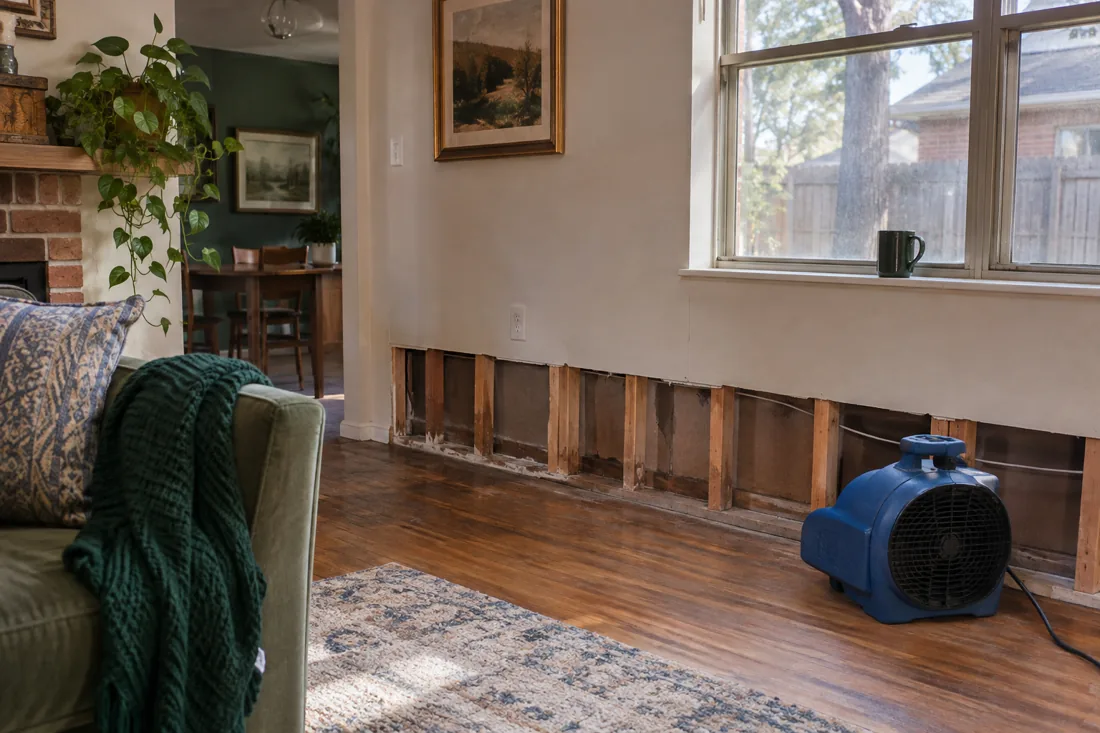 Structural Drying & DehumidificationMoisture trapped in framing, wall insulation, subfloors and cabinet bases after visible water is removed.
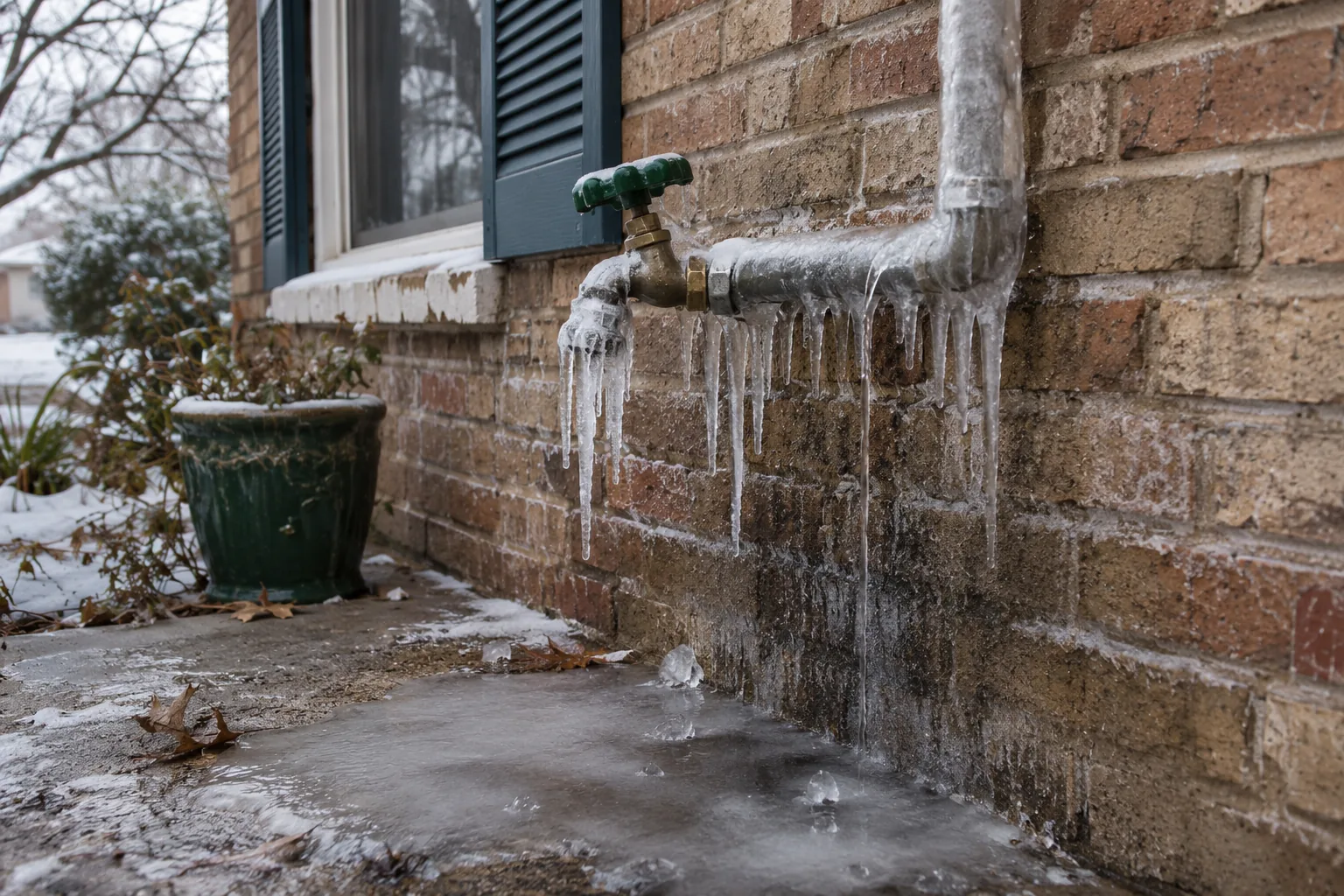 Frozen & Burst Pipe CleanupRuptured frozen supply lines sending water through attic insulation, wall cavities and the rooms below.
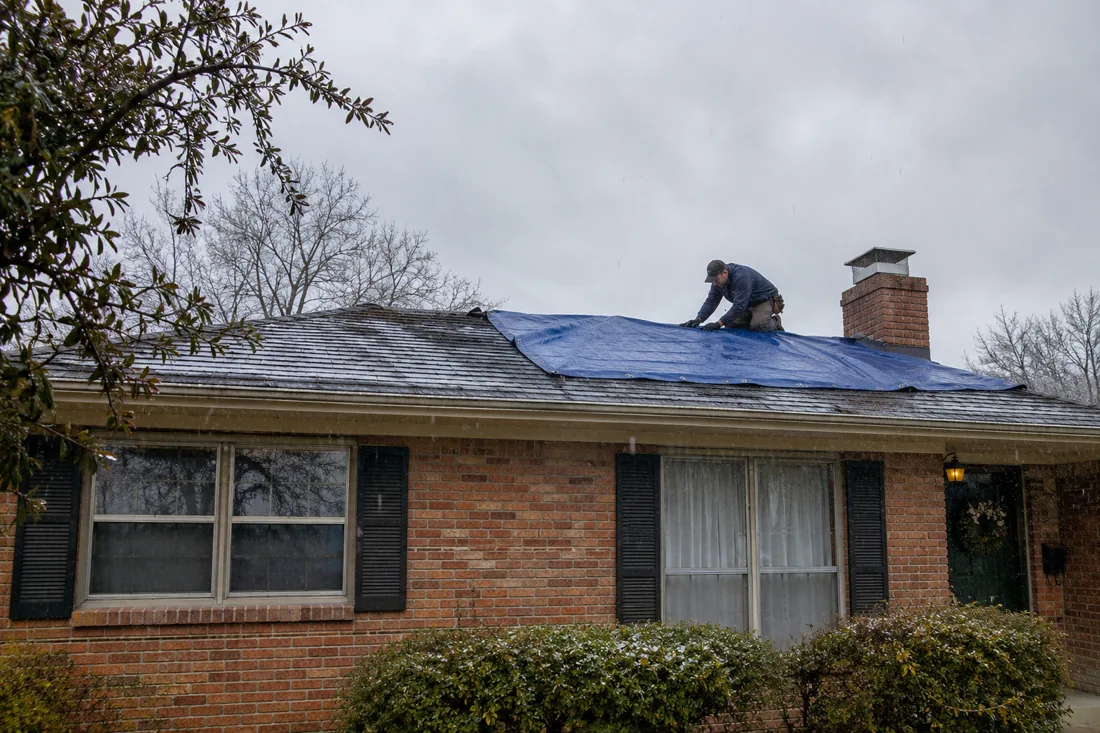 Sleet & Ice Storm Roof Leak Water DamageWinter roof leaks allowing melting ice or rain into attic materials and finished ceilings below.