
Damp Framing Below the House Needs a Source-First Plan
Do not crawl into a wet under-floor space to inspect growth. Access, electrical conditions and contamination need assessment from the start.
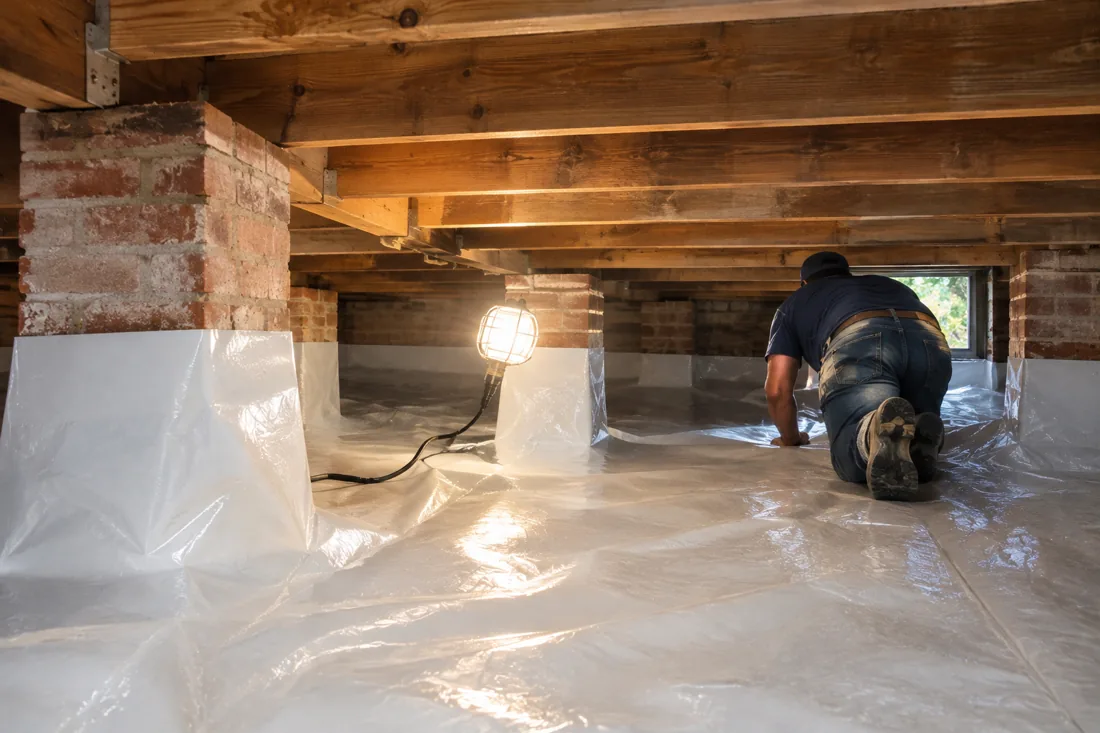
In a pier-and-beam home, a musty room can be connected to damp joists, insulation or the subfloor below it. Mold cleanup and encapsulation are different parts of the response. Removal addresses affected material; a ground vapor-control system addresses a particular moisture route. Neither replaces correction of an active pipe or recurring water entry.
Fort Worth Water notes that unprotected under-house plumbing can freeze. North Texas clay also changes with moisture, making drainage and ground conditions relevant to the building assessment. The actual source still needs confirmation. A ground cover should not be used to hide a puddle or conceal affected wood that needs access.
Sequencing Crawl Space Cleanup Before Encapsulation
- Identify water entry.
Leaks, standing water and recurring drainage conditions are considered first.
- Assess framing and insulation.
The scope identifies affected and retained under-floor materials.
- Clean and dry the space.
Controlled removal and material checks precede moisture-control installation.
- Plan the ground system.
Coverage, drainage and future access are designed around the corrected space.
Water still spreading? Call now to speak to a specialist.
(XXX) XXX-XXXXA Vapor Cover Cannot Repair a Pipe or Drain the Ground
Water vapor from exposed ground is different from liquid water entering through a plumbing failure or drainage problem. The source assessment should distinguish them before a ground system is proposed. If standing water is present, crawl space water removal and source work come before covering the area.
Record when water appears and which locations stay damp. A leak associated with fixture use directs attention to plumbing, while repeated entry after precipitation raises another question. Cleanup should coordinate with the responsible source provider rather than treating installation of a cover as proof that future inflow has been resolved.
Inspect Joists and Subfloor Surfaces Behind Wet Insulation
Affected insulation can conceal the wood surface that needs assessment. The work plan identifies what must be removed for inspection or because the material cannot remain. It also considers the flooring above, where another layer may be restricting drying or hiding damage from the same event.
Opening the space can disturb material and debris, so access and handling controls matter. The route beneath the house and the route out through the access hatch should both be planned. An occupant should not enter to move equipment or peel insulation away for a photograph. The condition needs controlled assessment rather than improvised access.
| Stage | What should be resolved |
|---|---|
| Water source | Active leaks, entry and standing water |
| Material scope | Affected insulation, framing and subfloor access |
| Cleanup and drying | Condition of retained surfaces before concealment |
| Encapsulation plan | Ground coverage, drainage coordination and future inspection access |
Mold Cleanup and Drying Address Different Material Conditions
Removing growth does not automatically establish that wood has dried, and lowering moisture does not remove growth already present. The scope needs both conditions addressed in the appropriate sequence. Retained framing should be accessible for the project review rather than hidden immediately beneath replacement insulation or a new ground installation.
Where the extent is uncertain, mold assessment helps define the investigation and any applicable documents. Texas assessment and remediation roles need to be arranged as required for the job. A scope should not substitute an informal look through the hatch for an assessment of the affected area.
An Encapsulation Plan Must Preserve Useful Access
A ground system needs to fit the particular crawl space and the source corrections already made. Pipe routes, support locations and the access opening affect installation and later inspection. A cover that obstructs necessary access can make a future leak harder to investigate. Work should leave a clear record of what was covered and what must remain reachable.
Drainage and air-moisture management are also design questions, not automatic benefits of any sheet placed on the ground. The plan may involve other providers or equipment depending on the conditions. Structural drying addresses retained wet materials, while the longer-term ground arrangement needs its own site-specific decisions.
What to Recheck If the Musty Odor Returns Upstairs
A new odor can reflect another wet pocket, renewed leakage or material that was not included in the earlier work. Check the source history and the accessible locations again rather than adding fragrance or assuming the cover has failed. The room above may also have its own damp floor layer that needs attention.
Keep source-repair notes, material findings and the ground-system layout together. They provide a useful record if later plumbing work requires access beneath the house. A change in the crawl space should not automatically be attributed to seasonal weather without investigating the actual location and timing of the moisture.
The mold planning tool can organize location, visible area and concealed growth. Crawl-space access, damaged insulation, source corrections and the design of a ground system can extend beyond those inputs. Discuss cleanup and encapsulation as connected but separate scopes so each decision is clear.
Sources: USDA soil moisture behavior, Fort Worth under-house plumbing, EPA moisture control, Texas mold roles.
Water Removal and Assessment Before a Crawl Space Is Covered
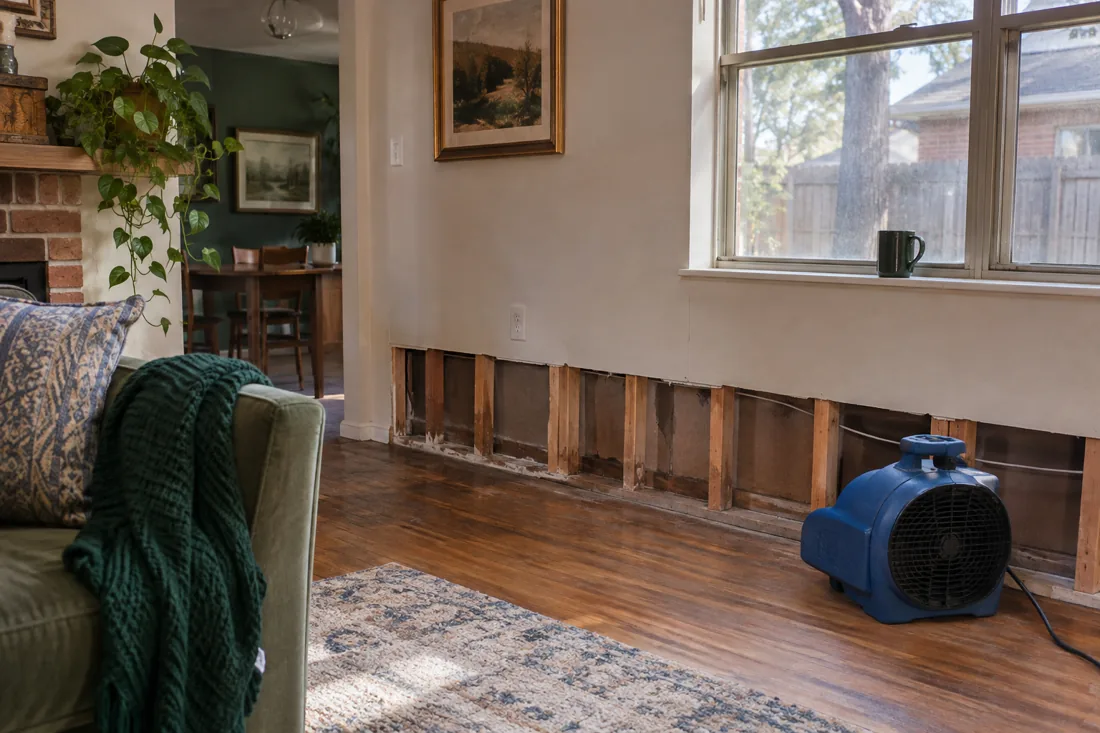 Structural Drying & DehumidificationMoisture trapped in framing, wall insulation, subfloors and cabinet bases after visible water is removed.
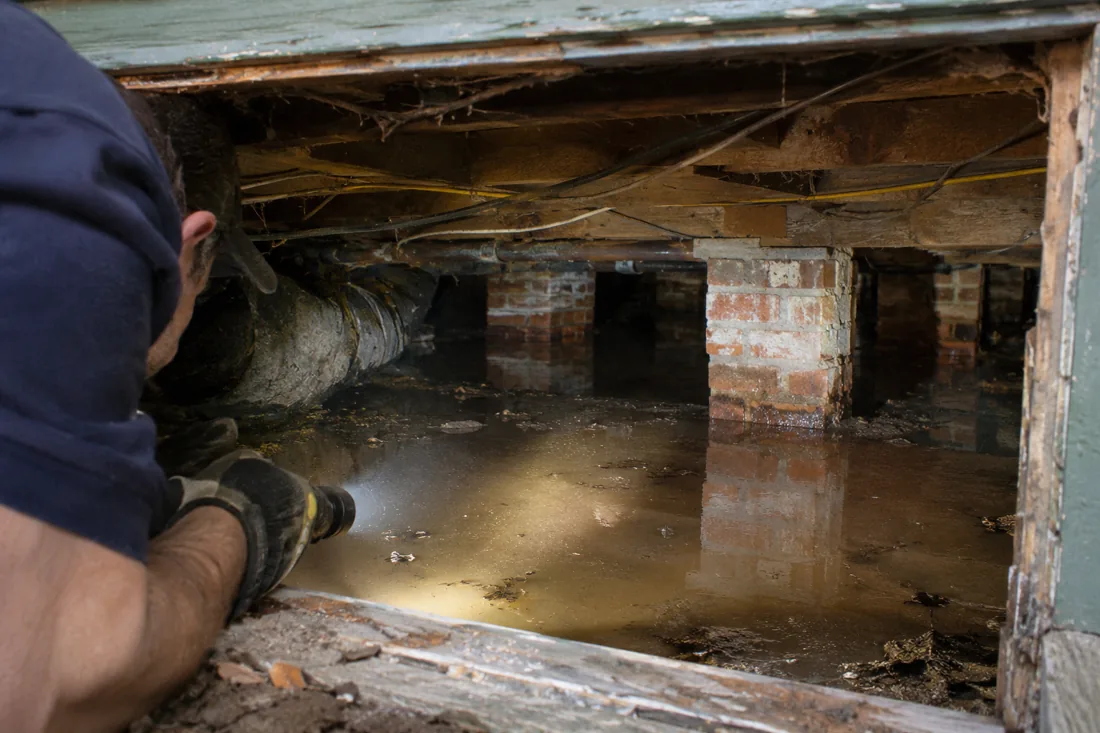 Crawl Space Water RemovalStanding water beneath pier-and-beam houses wetting exposed joists, insulation and the underside of wood floors.
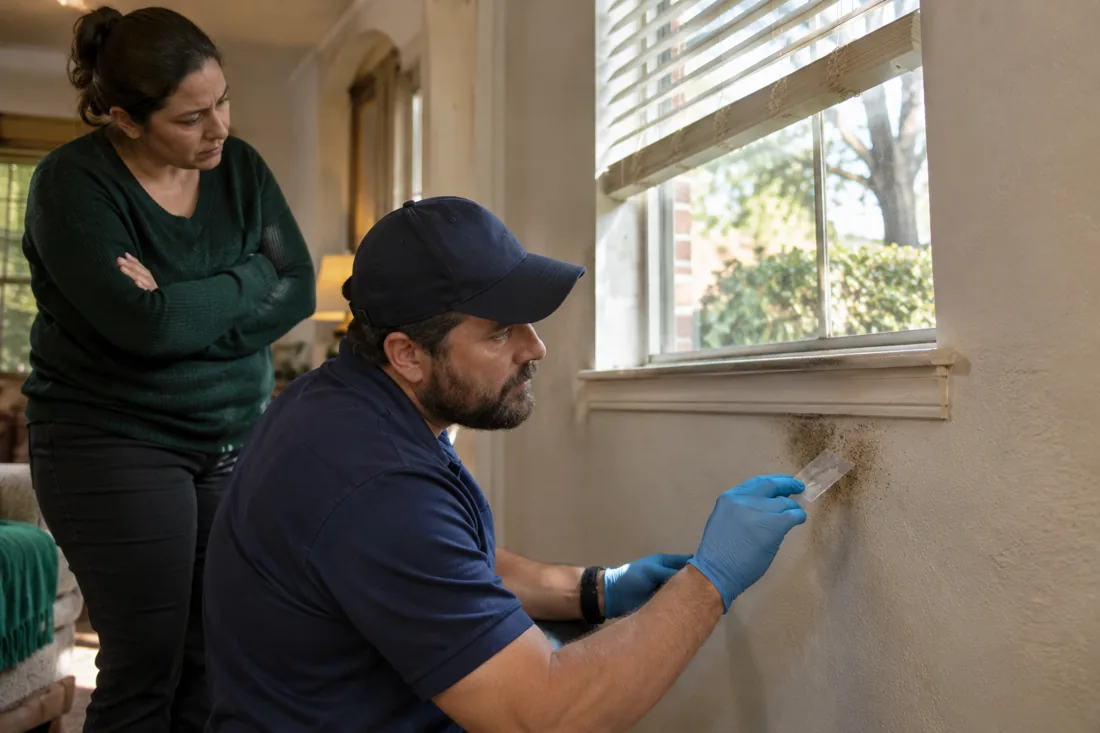 Mold Inspection & TestingUnexplained damp odors and suspected growth requiring a closer look at moisture and affected surfaces.