
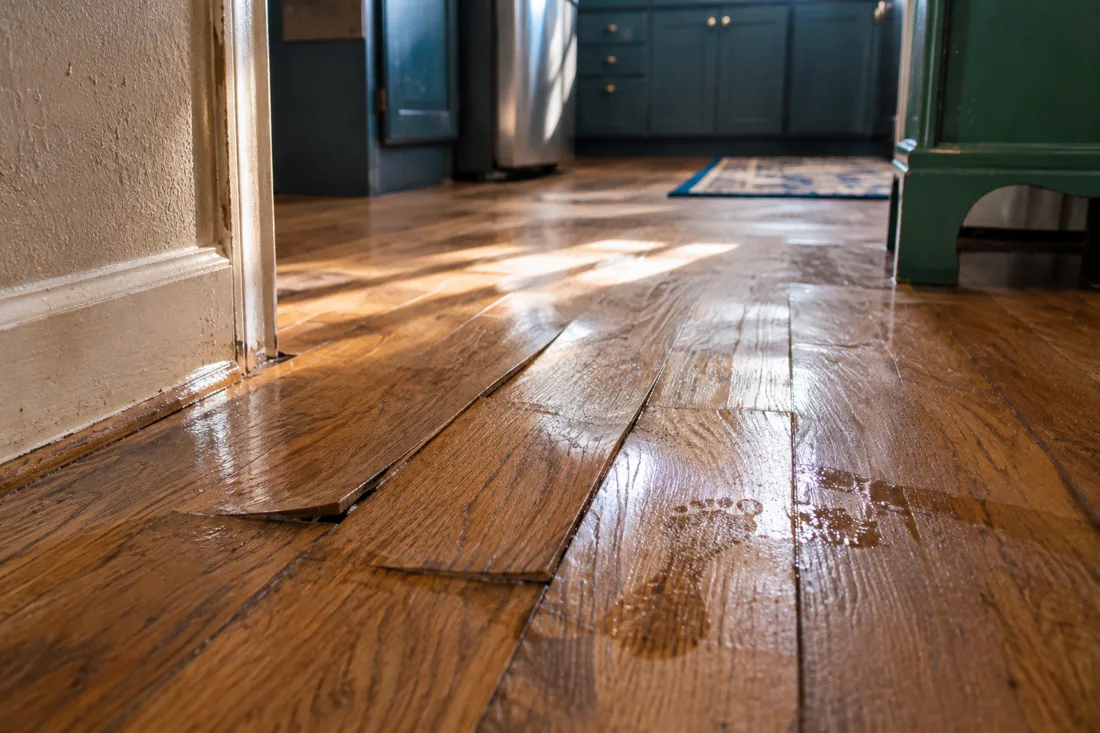
Cupped Edges or Lifted Boards After a Leak?
Stop the source if safe, remove loose surface water without soaking the floor further, and keep people away from lifted or unstable boards.
Wood flooring can change shape as moisture reaches its underside or enters joints. A top finish can slow drying from one side while the support underneath stays wet. The assessment checks the floor type, exposure and attachment before choosing a drying approach. Sanding a damp, cupped floor can create a different surface problem after the wood changes again.
A Fort Worth slab home and a pier-and-beam house support their flooring differently. An upstairs wood floor adds a ceiling assembly below. The visible boards do not show which of those layers has retained moisture, so the inspection follows the water through the actual construction.
Checking a Wet Wood Floor Before Repair Decisions
- Call and explain what happened.
A specialist asks about the water source and the rooms affected.
- We find where the water went.
Moisture checks locate wet materials, including inside walls and under floors.
- Water removal and drying.
Standing water comes out first. Drying equipment goes where it is needed.
- Checked dry before repairs.
Materials are confirmed dry before anything is closed up or replaced.
Water still spreading? Call now to speak to a specialist.
(XXX) XXX-XXXXIdentify the Floor Before Treating the Swelling
Solid hardwood, engineered flooring and a wood-look finish do not behave as the same material. The wear layer, core, adhesive and support each affect what can be retained. The specialist checks accessible edges and the installation history where known rather than assuming the name used for the floor describes all its layers.
A board can be physically damaged as well as wet. Separation, a weakened bond or a lifted section requires attention apart from its moisture level. The cleanup plan should describe whether it is trying to dry a retained floor or expose the support after damaged flooring is removed. Neither path promises that every board will return to its earlier shape.
Follow Water Under Cabinets and Along Floor Transitions
A kitchen leak may travel beneath boards before it emerges at a doorway. Cabinet bases, a floating floor edge or a change to tile can conceal its route. Moisture checks therefore extend beyond the discolored board. An adjoining room can need inspection even when its top surface has no visible stain.
Where the source was an appliance connection, appliance leak cleanup also checks the recess or cabinet space behind the floor damage. A suspected under-slab source requires plumbing investigation. Our slab leak damage cleanup addresses the wet building materials after the supply problem has been identified.
What Cupping, Crowning and Buckling Need Checked
The shape of a board is a clue to examine, not a complete diagnosis of the moisture source. The inspection compares the floor condition with accessible readings and the water history. Changes that continue after the apparent leak has stopped can point to retained moisture or renewed water entry.
| Observation | What needs assessment |
|---|---|
| Raised board edges | Moisture difference through the board and below it |
| Lifted flooring | Attachment, clearance and safe access around the raised section |
| Dark joints or stains | Water route, finish condition and material damage |
| Damp wall perimeter | Wall plate, baseboard and adjoining floor layers |
Dry the Assembly Before Sanding the Surface
A flooring repair should not conceal a wet support or flatten a board that is still changing with moisture. The retained floor and its support need checks during drying, with access planned around the installation. Some situations allow targeted drying; others require removal where damage, contamination or restricted access makes retention unsuitable.
Drying equipment is arranged to handle moisture released from the assembly. Excessive heat or a household fan aimed at one patch is not a substitute for those checks. Structural drying coordinates the wall edges, support and room air rather than treating the top of the wood as the only wet surface.
Separate Moisture Recovery From the Final Floor Repair
Once readings and material condition support the next stage, the repair provider can assess refinishing, board replacement or a larger flooring change. A dry board can still be stained, split or separated. Keep that physical repair decision distinct from the record of how the wet assembly was dried.
Watch for fresh dampness at the wall base, a new odor or a raised edge returning after work has stopped. A rug can hide those changes and restrict access to the affected floor. Keep the source-repair information with the drying record, especially where the original leak was concealed beneath an appliance or inside a wall.
The water damage planning tool accounts for affected materials because a wood floor can involve support layers and fixed cabinets. It cannot establish whether a particular floor is suitable for sanding or retention. Those decisions depend on the installation, exposure and its condition after drying.
Sources: NWFA technical guidance, EPA wood drying.
Other Water Paths That Affect Wood Flooring
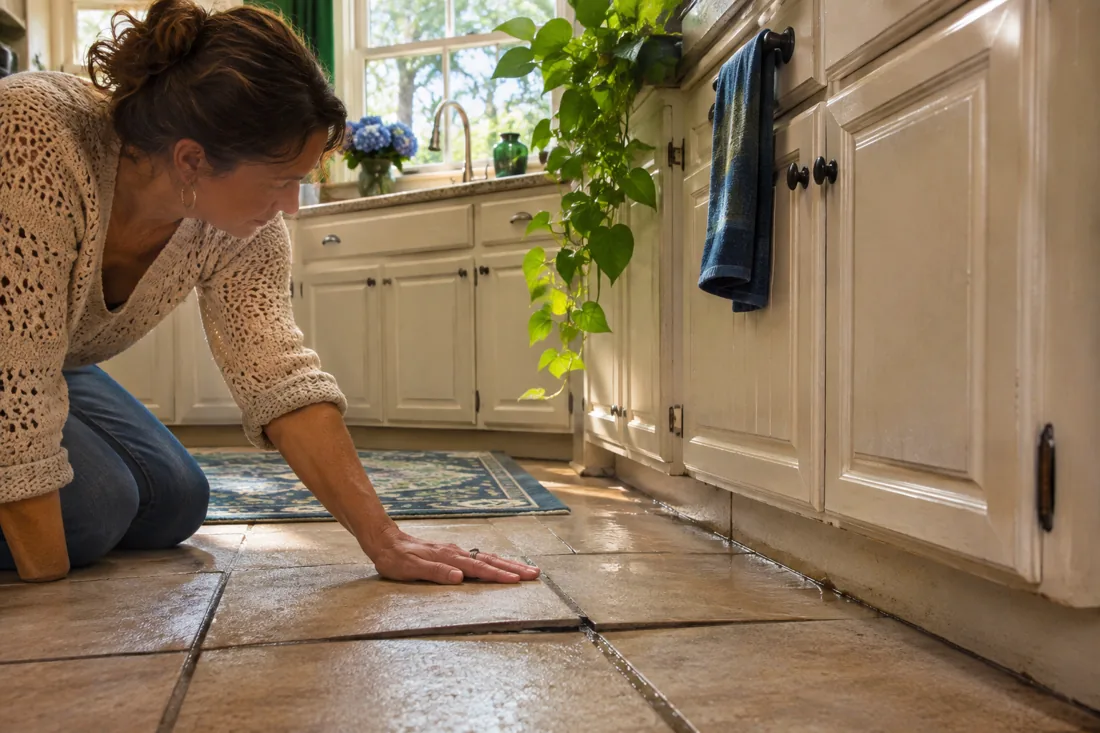 Appliance Leak Water DamageWasher hoses, dishwasher connections and ice maker lines leaking beneath kitchen cabinets or laundry flooring.
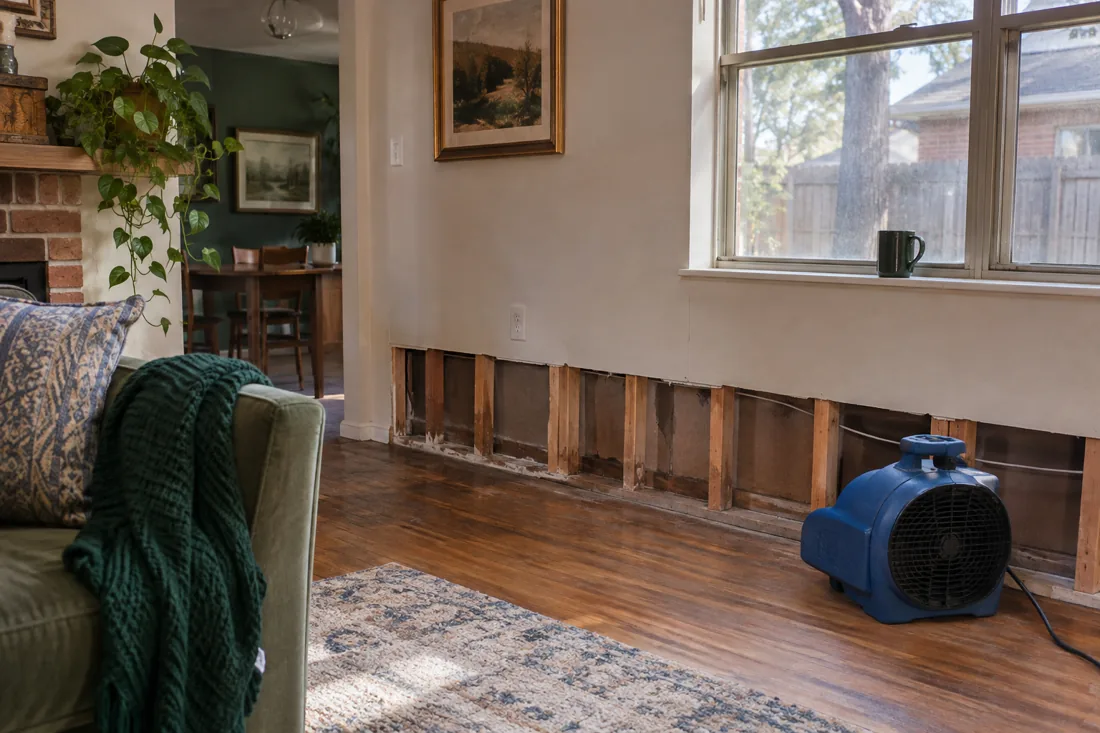 Structural Drying & DehumidificationMoisture trapped in framing, wall insulation, subfloors and cabinet bases after visible water is removed.
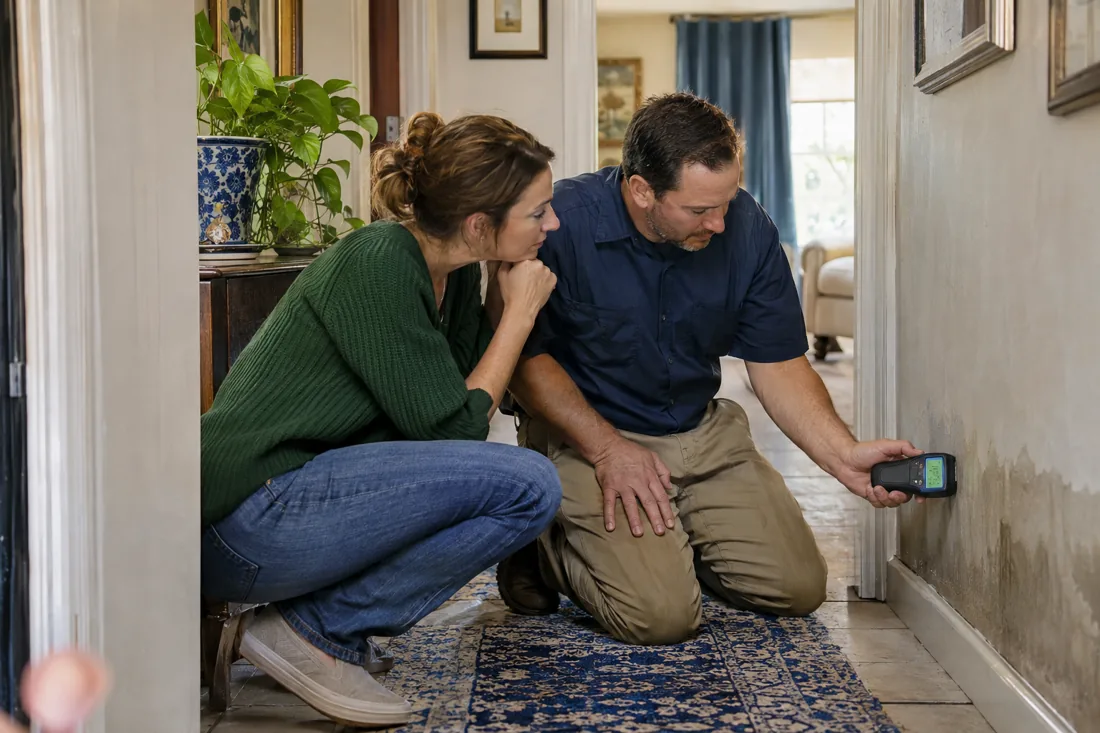 Slab Leak Water Damage CleanupWater from an under-slab plumbing leak reaching floor coverings, wall plates and nearby cabinet bases.