
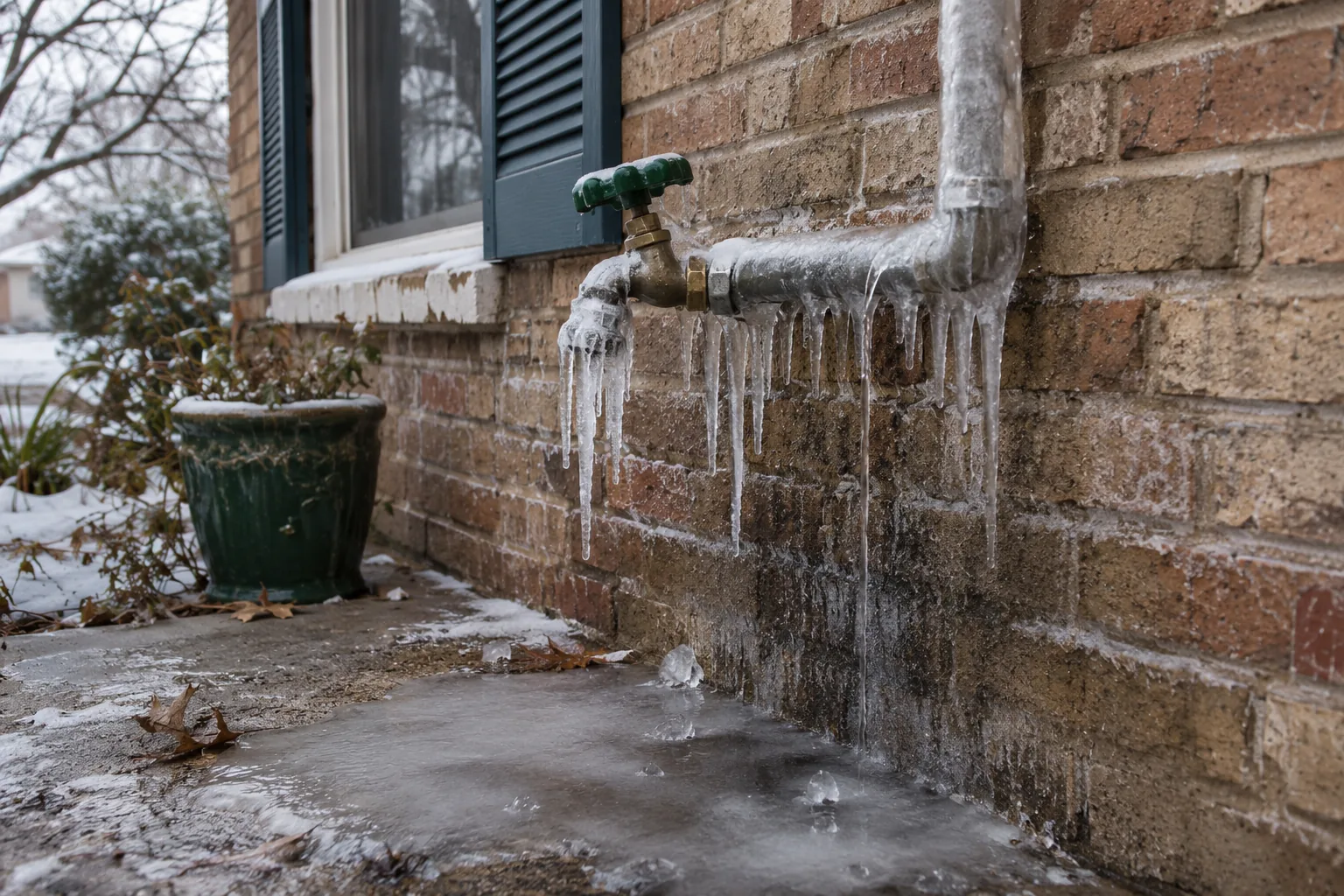
Pipe burst in the attic or wall? Start at the shutoff.
A ceiling drip after a freeze can be the visible end of a much larger wet area. Stop the supply if you can safely reach the household shutoff, then keep clear of the rooms beneath a sagging ceiling.
Do not walk into standing water near outlets, extension cords or appliances. If reaching a breaker or valve means crossing that water, stay out and arrange help. Move people and pets away from the affected room. Photograph the damage from a dry position. Heavy, wet ceiling material can fall without a safe place for you to stand underneath it.
A plumber repairs the ruptured line. We address the water that has already entered insulation, wall cavities, flooring and the space beneath a raised house. The specialist checks whether the supply is still running and which rooms have been affected.
How a Fort Worth Burst Pipe Cleanup Visit Takes Shape
- Call and explain what happened.
A specialist asks about the water source and the rooms affected.
- We find where the water went.
Moisture checks locate wet materials, including inside walls and under floors.
- Water removal and drying.
Standing water comes out first. Drying equipment goes where it is needed.
- Checked dry before repairs.
Materials are confirmed dry before anything is closed up or replaced.
Water still spreading? Call now to speak to a specialist.
(XXX) XXX-XXXXCold air reaches the pipe before you feel it indoors
Fort Worth’s water department identifies unheated attics, crawl spaces and cabinets as places to check for exposed plumbing. A comfortable living room does not tell you how cold a line is at the edge of an attic or behind an exterior wall. A gap in insulation or a draft near the pipe can leave a small section exposed.
In a pier-and-beam home, a line beneath the floor may be outside the heated space. In a slab home, plumbing can still rise through an exterior wall or pass into an unheated garage. The inspection follows the actual route. House age alone cannot show where a remodeler added a water line or left an uninsulated connection.
Where pipes can freeze in a Fort Worth home
This cutaway shows exposed locations to check, not the plumbing plan of any one house. Each needs its own insulation and heat assessment.
Source: City of Fort Worth, frozen pipe preparation; Fort Worth residential code amendments, pipe freeze protection. Illustrative, not to scale.
Follow the water from the split to the lowest wet material
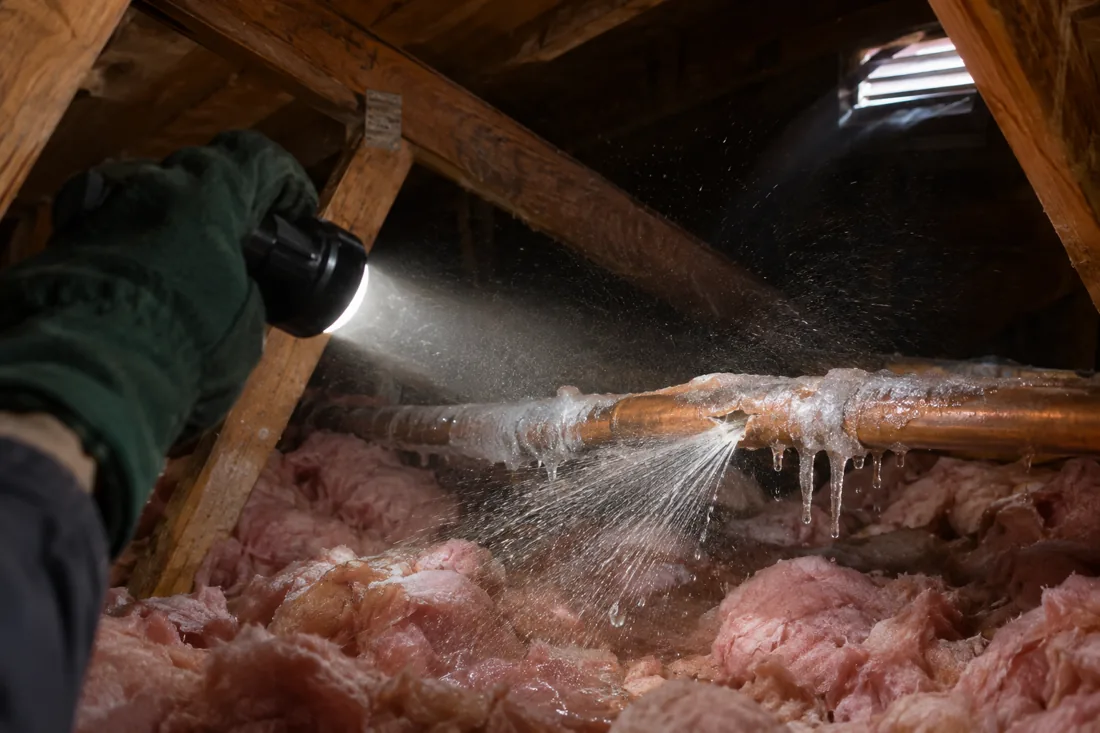
A break in an attic can wet the top of the ceiling before water appears in the room. It may travel along a joist, enter a light opening or run inside a wall. The damp patch on the paint can be offset from the broken line. We look beyond that patch to the materials along the likely water path.
Below an exterior wall leak, water can collect beneath the bottom plate and spread under flooring. Cabinet bases can block airflow around those pockets. A raised wood floor needs a look from underneath where access is safe. Standing water in a crawl space and a wet subfloor are connected parts of the same drying problem.
Water removal and deep drying, from first check to final reading
- Confirm the source and the safe work area.
Identify the plumbing break with the owner and coordinate around the repair. Check overhead damage, wet electrical areas and access to rooms before moving equipment inside.
- Map moisture beyond the visible puddle.
Take material readings around walls, flooring and adjacent spaces. Mark the wet boundary and inspect concealed areas that accessible readings suggest need another look.
- Extract accessible water.
Remove standing water from floors and reachable low points. Repeated extraction from a wet carpet may be needed before decisions about its padding and backing can be made.
- Open a path to trapped moisture.
Remove damaged material that cannot remain or blocks drying. That can include saturated insulation or affected lower drywall. Explain the removal boundary before closing the area for work.
- Dry the structure and check its progress.
Place air movers and dehumidifiers around the affected assemblies. Compare follow-up readings with the drying goal and suitable dry reference materials. Adjust the setup if a cabinet base or wall pocket remains wet.
- Check concealed surfaces before repairs cover them.
Review the remaining materials and document the moisture findings. Drying and pipe repair must be addressed before new insulation, trim or flooring covers the original leak path.
A quiet thaw can reveal the second leak
A pipe can remain blocked by ice while a split is hidden. When water begins flowing again, the leak becomes visible. Fort Worth’s guidance warns that a frozen line may crack and release water as it thaws. Have the plumbing assessed rather than treating restored faucet flow as proof that the line is intact.
After a repair, watch the wall on both sides of the affected room. Note a new stain, a damp cabinet bottom or a fresh sound of dripping. Tell the plumber about a continuing loss of pressure. Report a previously dry edge that becomes wet again, because drying equipment cannot compensate for an active supply leak.
Musty insulation and lifting trim deserve another look
Water can stay in insulation after the ceiling surface feels dry. A persistent damp smell, a swollen door casing or paint lifting near the floor points to an area worth checking. These signs do not identify mold by themselves. Avoid sealing the cavity with new drywall until its moisture condition has been assessed.
EPA guidance emphasizes drying water-damaged materials promptly to reduce mold risk. When there is suspected growth, do not brush it off or direct fans at it. Containment and removal may need to happen before ordinary drying continues. Structural drying and mold removal address different parts of that decision.
Choose the cleanup route that matches where winter water entered
A freeze can affect a water heater connection, a fire sprinkler line or a roof opening during the same cold spell. The source changes the access and cleanup plan. Use the matching service below when describing the damage; keep the pipe checklist for the immediate shutdown steps.
For a closer look at exposed plumbing, the pipe freeze risk checker organizes questions about attic lines, garage equipment and an empty home. If water is already inside, call and explain the wet rooms before spending time measuring them for a tool.
More Winter Water Damage Cleanup in Fort Worth
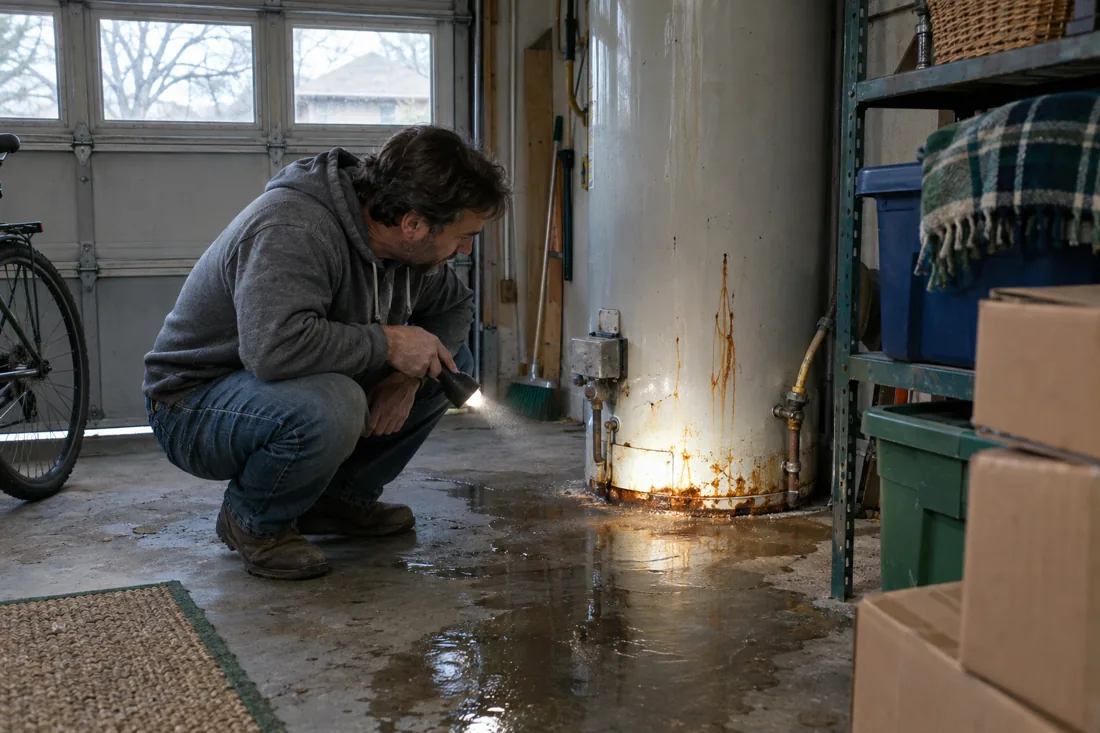 Water Heater Leak CleanupLeaking tanks and water heater connections soaking garage walls, utility closets and adjoining interior rooms.
 Slab Leak Water Damage CleanupWater from an under-slab plumbing leak reaching floor coverings, wall plates and nearby cabinet bases.
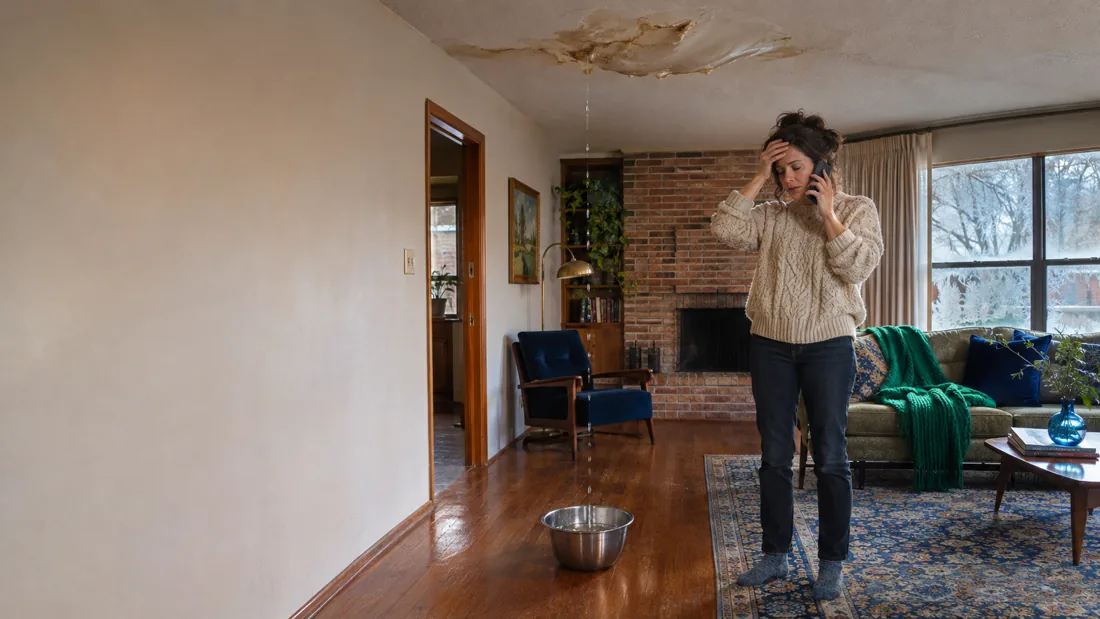 Ceiling & Attic Water DamageOverhead leaks saturating ceiling drywall and insulation before drips appear inside the occupied room.
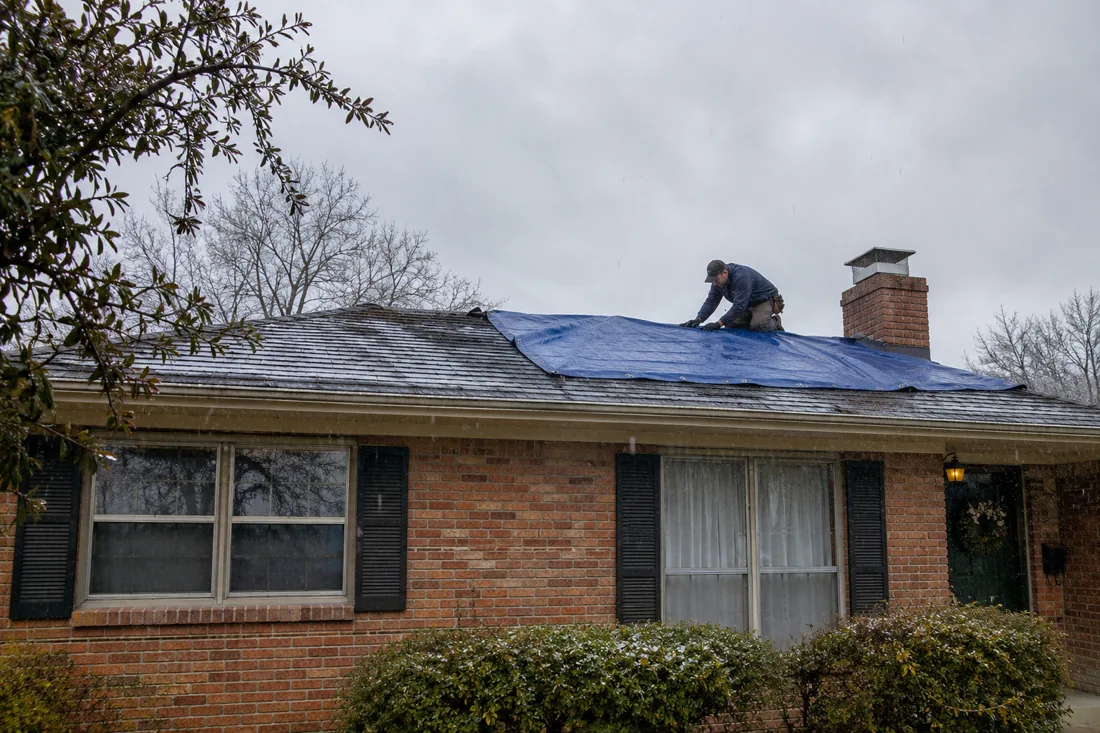 Sleet & Ice Storm Roof Leak Water DamageWinter roof leaks allowing melting ice or rain into attic materials and finished ceilings below.
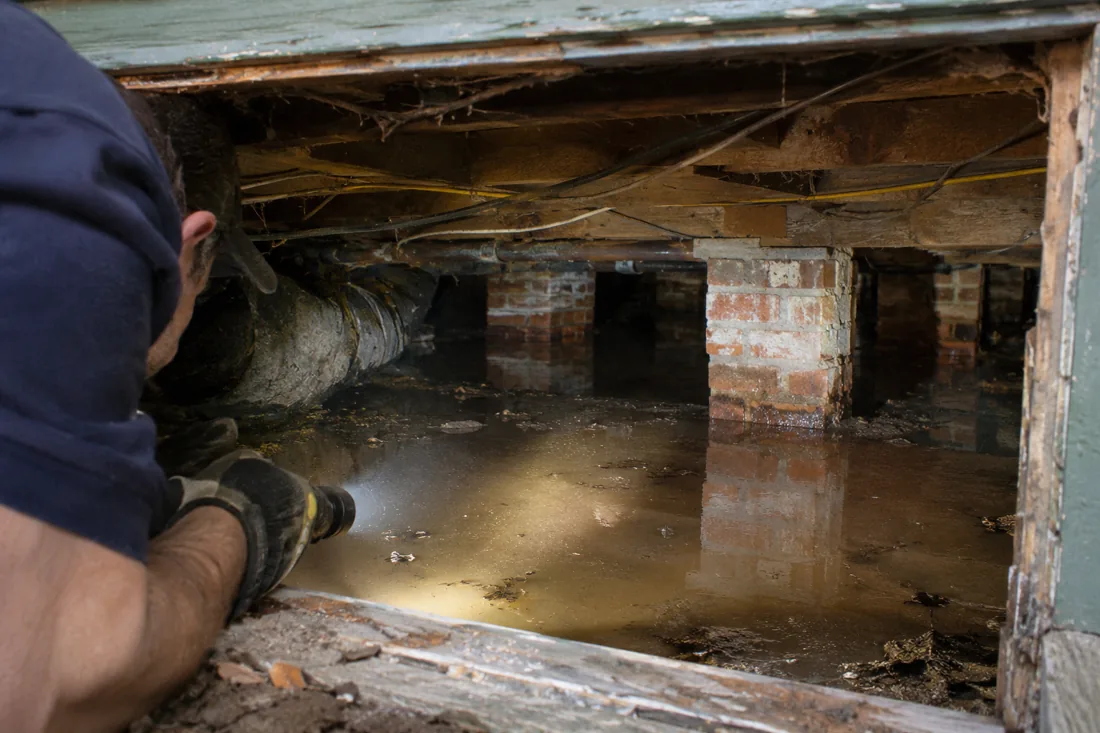 Crawl Space Water RemovalStanding water beneath pier-and-beam houses wetting exposed joists, insulation and the underside of wood floors.
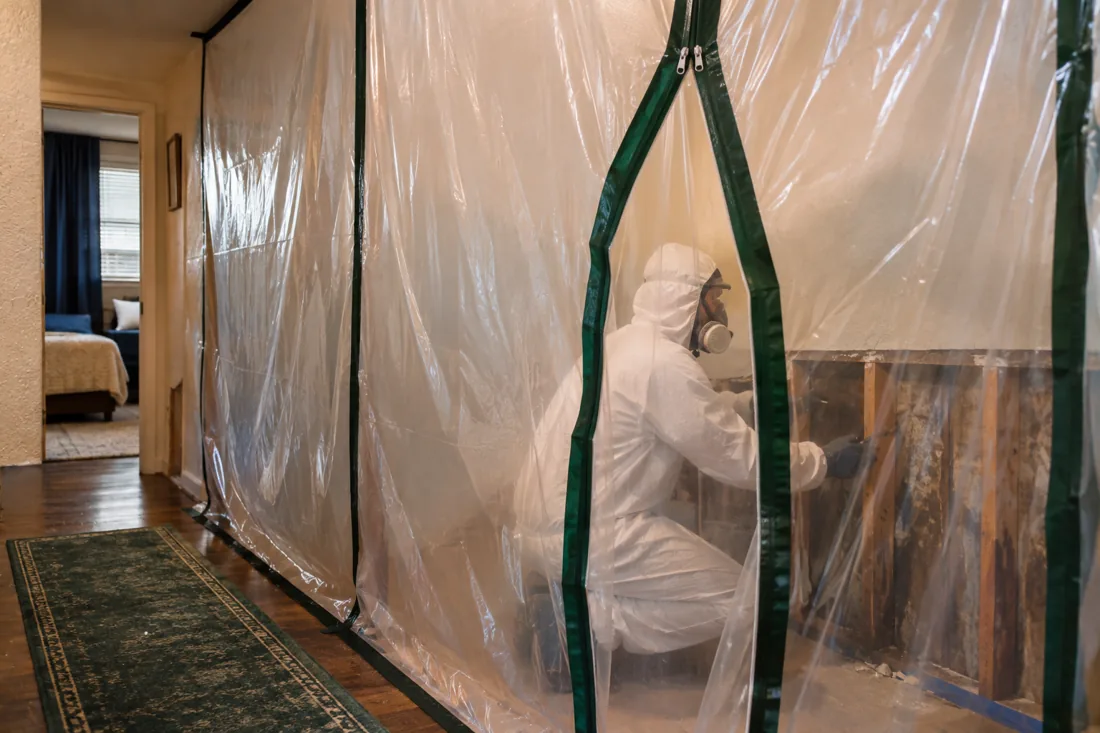 Frozen Fire Sprinkler Line Water DamageFrozen fire sprinkler piping releasing water above commercial work areas, apartment corridors or shared rooms.