
Wet Flooring From a Slab Leak Needs Two Separate Plans
A plumber locates and repairs the plumbing leak. This service addresses the water damage to flooring, walls and other building materials afterward.
A warm or wet patch of floor can prompt a plumbing investigation, but it is not enough to identify a buried failure. Water from another source can also travel under finishes. The cleanup assessment uses the confirmed source history and checks the assemblies above the slab rather than offering underground leak detection or pipe repair.
North Texas clay can change volume as its moisture changes. That is relevant to foundation conditions, but it does not establish the cause of a particular leak. The specialist concentrates on what is wet in the building and coordinates around the access and repair work identified by the plumbing provider.
Assessing the Building Damage Above an Under-Slab Leak
- Call and explain what happened.
A specialist asks about the water source and the rooms affected.
- We find where the water went.
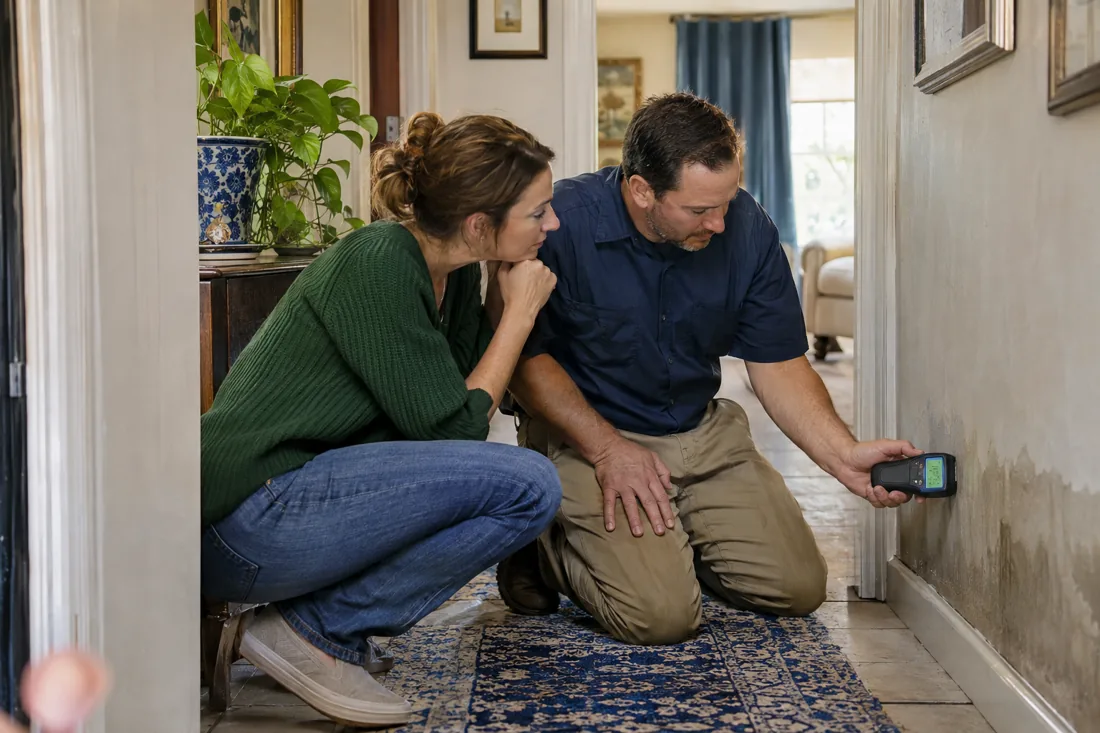
Moisture checks locate wet materials, including inside walls and under floors.
- Water removal and drying.
Standing water comes out first. Drying equipment goes where it is needed.
- Checked dry before repairs.
Materials are confirmed dry before anything is closed up or replaced.
Water still spreading? Call now to speak to a specialist.
(XXX) XXX-XXXXA Dry Floor Surface Can Hide Water Below the Finish
Water can collect between a floor covering and the concrete beneath it. It may emerge at a joint, doorway or wall base well away from the plumbing repair location. An inspection focused only on the visibly damp patch can miss that spread. Readings and accessible edges help determine which adjoining assemblies need attention.
The installation changes access. A floating floor, bonded wood floor and tile assembly cannot all be assessed or opened in the same way. The material's condition also matters: swelling, failed adhesive or deterioration can affect retention even where drying access is possible. The plan distinguishes wet support materials from finishes that have been physically damaged.
Keep Plumbing Excavation and Cleanup Access Clearly Defined
The plumbing provider determines the repair route and any access needed to reach the pipe. Cleanup should account for the resulting work area without assuming responsibility for buried-line diagnosis or structural excavation. A repair opening and the moisture boundary are not necessarily the same size or shape.
Record where the leak was found, when the source was isolated and which rooms showed symptoms. Those details provide context for later material checks. If a fresh wet edge appears after repair, both the source and retained moisture need consideration. Continuing inflow must be investigated instead of trying to offset it with more drying equipment.
Wall Plates and Cabinet Bases Can Be the Exit Route
Moisture can reach the bottom of a wall or the space beneath fixed cabinets while remaining concealed under the flooring face. Trim that lifts, a damp cabinet bottom or an odor at the wall perimeter identifies an area for further assessment. None of those signs by itself shows where the pipe failed.
| Visible change | Building material to check |
|---|---|
| Damp floor joints | Finish layer, adhesive and accessible slab surface |
| Swollen baseboard | Lower wallboard and wall plate |
| Wet cabinet bottom | Toe-kick cavity and panel edges |
| Lifting wood boards | Flooring attachment and the layers below |
Drying the Slab-Side Assembly After the Source Is Repaired
Accessible water is removed from the occupied building. The remaining work depends on the layers that retained it. Some finishes can be considered for drying with appropriate access; damaged or contaminated materials may need removal. The assessment should explain which assembly is being retained and how its condition will be checked.
Dehumidification handles moisture released into the room air, while the material itself needs repeat measurements. A dry-looking top surface cannot replace those readings. Structural drying follows that process, and wood-floor damage assessment addresses boards or support layers affected by the leak.
Foundation Symptoms and Moisture Symptoms Need Different Evaluation
Cracked tile or a change in a door's fit may raise a separate foundation question. Those observations should not be treated as proof that cleanup can correct a structural condition. The moisture work records wet materials and access; a foundation concern needs the appropriate evaluation outside that scope.
If concealed materials have remained wet, suspected growth or a persistent damp odor may require mold cleanup planning. New finishes should not cover those findings before the material condition is resolved. The repair sequence needs both the stopped plumbing source and a checked building assembly.
Use the water damage planning tool for affected room size, materials and exposure. It does not estimate buried-pipe diagnosis, tunneling or foundation repair. Flooring removal, cabinet access and the drying condition above the slab are the relevant cleanup factors to discuss on a call.
Sources: USDA expansive clay, ASCE Texas foundation guidance, EPA material drying.
Flooring and Wall Cleanup Connected to a Slab Leak
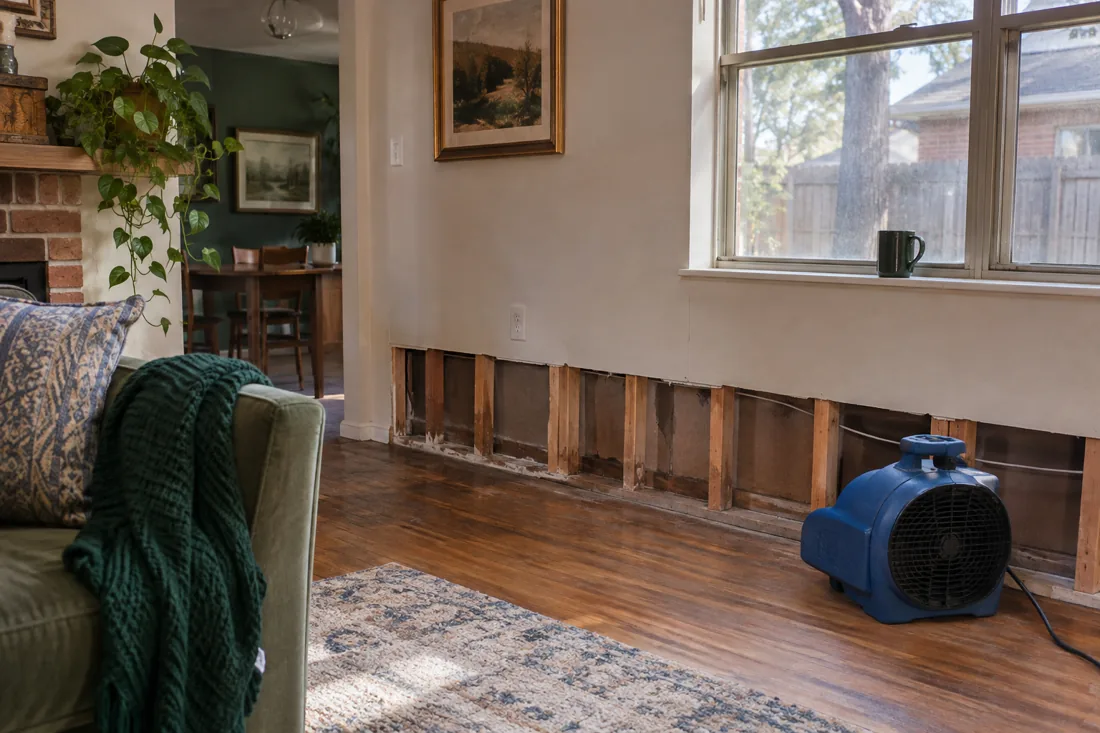 Structural Drying & DehumidificationMoisture trapped in framing, wall insulation, subfloors and cabinet bases after visible water is removed.
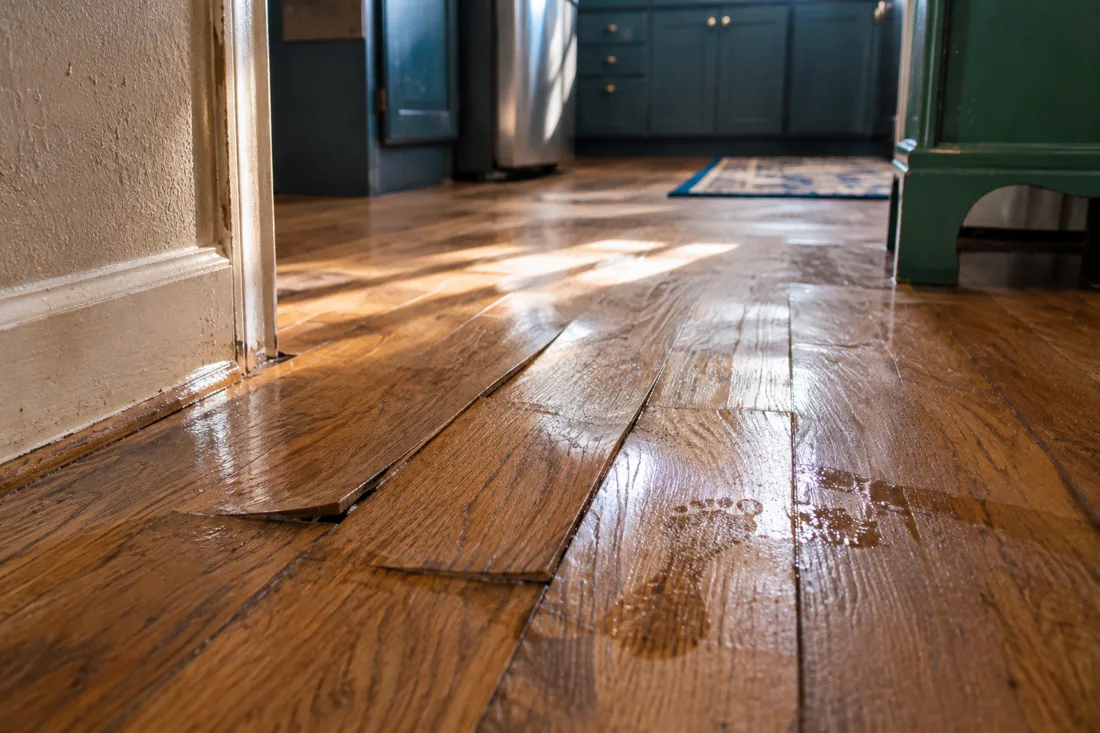 Hardwood Floor Water DamageWater beneath wood flooring causing lifted edges, cupping and damp areas along adjoining walls.
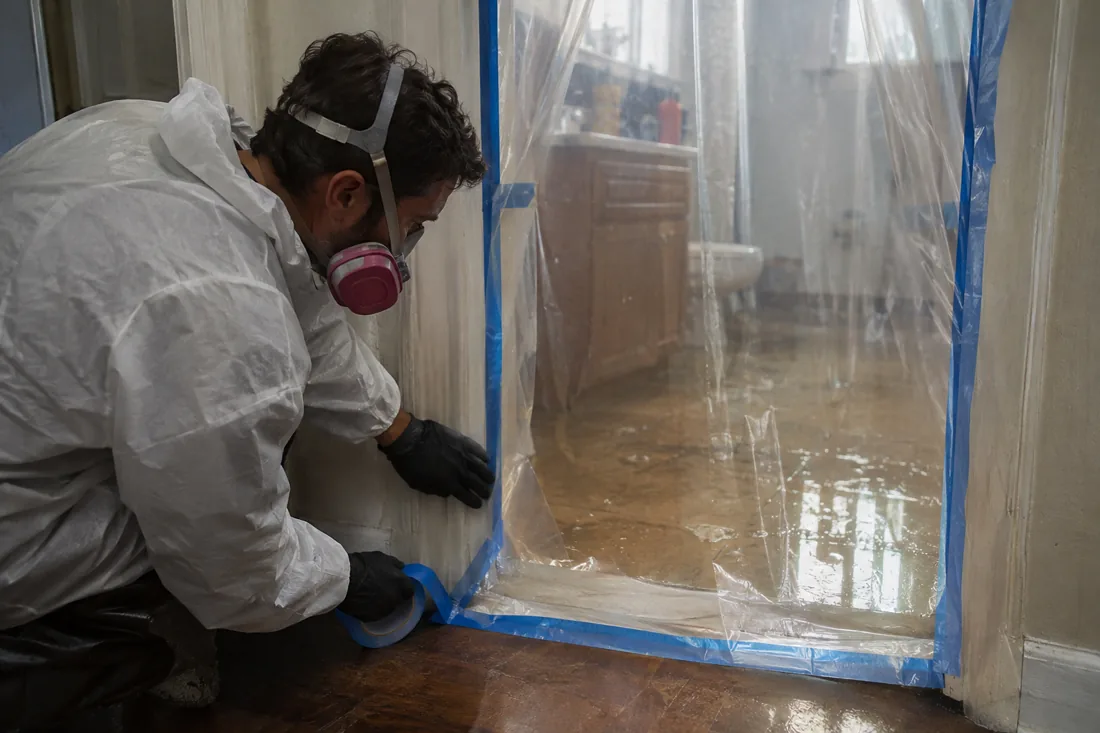 Mold RemovalVisible or concealed growth on damp building materials that needs containment and controlled removal.