
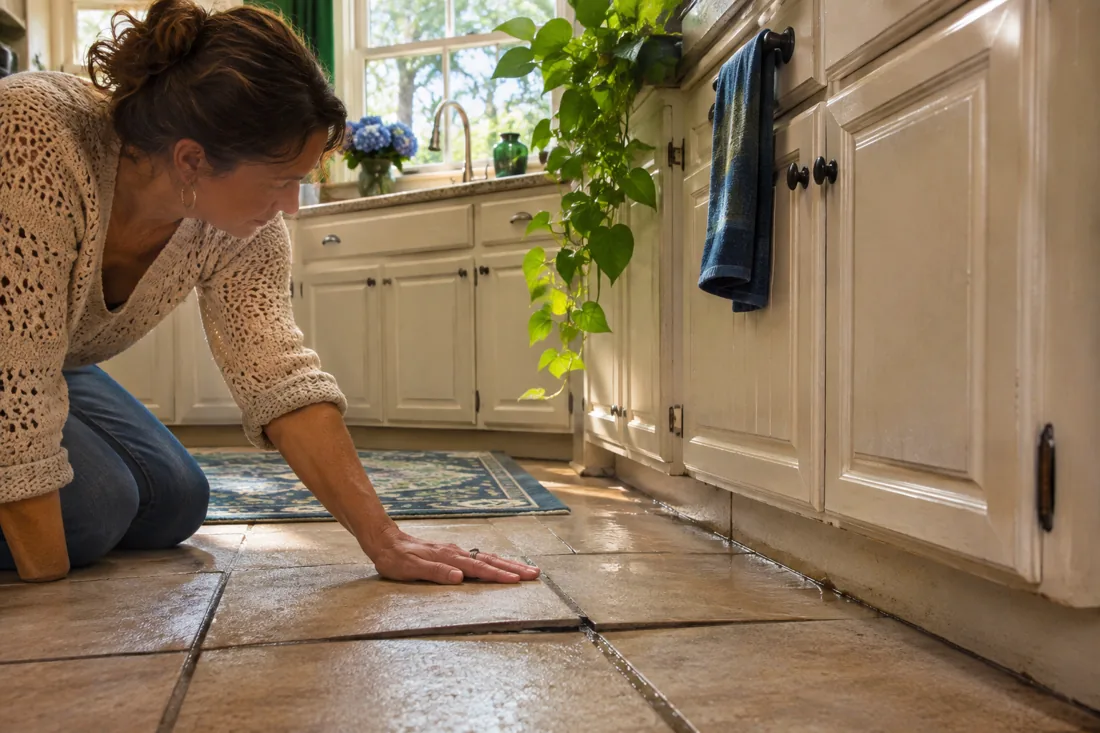
A kitchen puddle can extend past the visible edge
Water beside a Keller dishwasher may look confined to the kitchen while the cabinet toe-kick or adjoining floor has already become wet. Extraction starts with the accessible water, but the work boundary comes from checking its route. Tell us where the water first appeared, what appliance or pipe was involved and whether the household supply has been stopped. That gives the cleanup discussion a starting point beyond the size of the puddle.
Keep away from wet outlets and any ceiling that has started to sag. Move loose belongings only from a dry, safe position. Appliance leak cleanup can involve padding, baseboards and wall edges as well as the floor under the machine. A plumber or appliance technician handles the source repair; extraction and drying address the building materials left wet afterward.
Water moving beyond a Keller kitchen or bathroom?
24/7 emergency service available
Call now to speak to a specialist
Water Extraction and Cleanup Services We Provide in Keller, TX
- Emergency Water Removal
- Appliance Leak Water Damage
- Sewage Backup & Toilet Overflow Cleanup
- Structural Drying & Dehumidification
- Carpet Water Damage Restoration
- Hardwood Floor Water Damage
- Frozen & Burst Pipe Cleanup
- Water Heater Leak Cleanup
- Slab Leak Water Damage Cleanup
- Ceiling & Attic Water Damage
- Sleet & Ice Storm Roof Leak Water Damage
- Crawl Space Water Removal
- Frozen Fire Sprinkler Line Water Damage
- Mold Removal
- Mold Inspection & Testing
- Attic Mold Removal
- Crawl Space Mold Removal & Encapsulation
- Bathroom Mold Removal
- HVAC & Air Duct Mold Cleaning
- Commercial Water Damage Restoration
Read Keller housing age without guessing the pipe material
The 2024 ACS five-year estimates place 4,944 Keller housing units in the 2000–2009 construction band and 4,032 in 1990–1999. Those periods account for a substantial part of the city's stock, alongside older homes and more recent building. They help describe the community, but they cannot tell us what plumbing was installed or replaced at your address. A renovation may have altered a supply route without changing the recorded construction era.
For a slab house, water can spread across flooring or enter wall bases before the first damp mark becomes obvious. If your property has a raised floor, the underside of the floor and accessible crawl space need separate consideration. We do not assign either foundation type from a Census decade. Describe the actual floor assembly and any previous repair that may affect access.
What Keller's construction decades can tell you
Keller has an estimated 16,892 housing units in the 2024 ACS five-year table. These are construction-era estimates, not an inventory of pipe materials or foundations.
Source: U.S. Census Bureau, 2020–2024 ACS B25034. Shares rounded to one decimal; survey estimates carry margins of error.
Check Bear Creek mapping for the property you are concerned about
Keller's early settlement developed near the headwaters of Big Bear Creek. The city later incorporated in 1955. Today, Bear Creek Park provides a familiar reference along that local corridor, while the municipal stormwater mapping identifies the creek, drainage infrastructure and property-specific floodplain information. A water problem near the corridor still needs its own source investigation rather than an assumption based on the nearest park.
If runoff entered from outside, say so before anyone starts handling affected carpet or contents. Outside water differs from a recent indoor supply leak. Check current city information for drainage conditions, and avoid flooded routes to inspect a creek. An address close to Bear Creek Park or The Keller Pointe is useful for locating a property, but neither landmark establishes a particular home's flood exposure.
Different Keller soils need a property-level drainage check
The city's basic-soil mapping distinguishes sandy, clay and mixed categories. That is a reason to avoid calling every Keller lot expansive clay. Where moisture-sensitive clay is present, wetting and drying can change its volume; actual behavior depends on the soil profile and site conditions. A soft patch beside a foundation is an observation to investigate, not proof that a buried water line has broken.
Notice where roof discharge and surface water collect, without digging beside utilities or entering a wet crawl space. A recurring damp floor may need plumbing investigation, drainage review or both. Our slab leak water damage service addresses the resulting wet materials after the source is identified. It does not replace plumbing leak detection or a foundation evaluation.
Know which water-system role your question concerns
Keller purchases treated drinking water from Fort Worth and operates its local retail utility. That arrangement is different from an indoor plumbing branch or a leaking appliance hose. A neighborhood supply interruption is a utility question; a split line inside a wall needs a plumber. Make the distinction when reporting the problem so the water source and the wet-room cleanup can be handled through the appropriate contacts.
How treated water reaches a Keller customer
Keller runs the retail utility and purchases treated drinking water from Fort Worth. Its conservation plan distinguishes the city's distribution role from treatment.
Source: Keller water-supply information. Supply and distribution roles do not establish the cause or responsibility for a private plumbing leak.
Prepare attic and garage branches before the next cold spell
The regional NWS record shows that freezing weather can occur outside January, including the edges of the winter season. Keller does not need a separate pipe-failure temperature rule: the vulnerable location is the unheated route, insulation gap or exposed fixture. Check the current forecast and review accessible plumbing before cold weather. A supply branch above a garage may need attention even when the occupied rooms feel warm.
Use the freeze preparation and burst-pipe checklist to separate work before cold weather from actions during a leak. After a thaw, watch accessible ceiling corners and wall bases for new moisture. A plumber should direct the repair and restart. Ceiling and attic water cleanup follows the water that has already reached insulation, framing or the room below.
Ask what will be measured before the room is closed
A drying plan should identify the wet materials, the areas that can be reached and the readings used to track change. Ask whether the cabinet base or opposite side of a wall was checked. If carpet is involved, the visible fibers and underlying pad may need different decisions. Equipment placement alone does not describe how the floor assembly will be evaluated.
Before replacing finishes, review the structural drying and dehumidification scope and keep the source-repair notes with the moisture record. For planning questions, the water damage calculator explains why area, contamination and access affect the range. It cannot decide what an insurer will cover or what concealed layers are wet.
Keller questions about source, access and drying
Does living near Bear Creek Park mean my Keller home is in a floodplain?
Are Keller's newer homes protected from attic pipe leaks?
Who should I contact about a Keller supply interruption versus an indoor leak?
Can a dry tile surface hide water from a dishwasher leak?
Local data sources for Keller
Housing: Census ACS B25034. City context: Keller history, stormwater layers, soil mapping, The Keller Pointe. Regional conditions: NWS winter climate and NRCS clay behavior. Water supply source is linked above.